Featured Commercial Fitness Equipment Showcase
Explore our precision-engineered commercial gym equipment lineup available for direct supply and export to New Zealand. Designed in California, tested for heavy peak-hour commercial floor traffic, and compliant with international standards, these units provide unmatched ROI and durability for fitness facilities across Auckland, Wellington, Christchurch, and beyond.
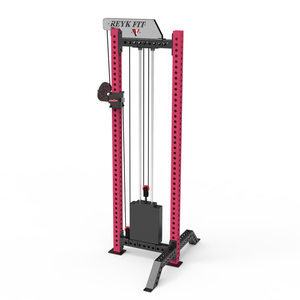
High Quality Single Pulley Pull-Down Cross Cable Crossover Machine Adjustable for Unisex Exercise Training Gym Equipment
Get a Quote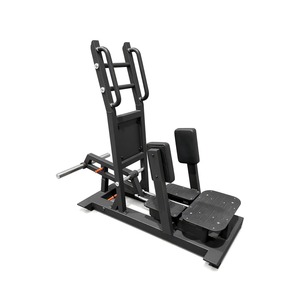
Commercial Use Gym Plate Loaded Gym Machines Plate Loaded Hip Thrust Machine Glute Drive Adductor Abductor Machine
Get a Quote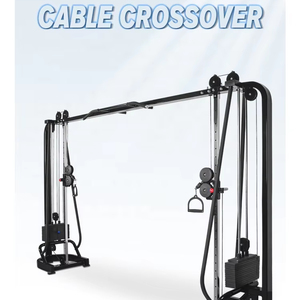
Hot Sale High Quality Commercial Cable Crossover Strength Training Equipment Gym Equipment
Get a Quote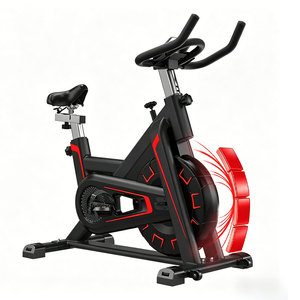
Gym Exercise Spinning Bike Indoor Commercial Professional Cardio Training Spinning Bike
Get a Quote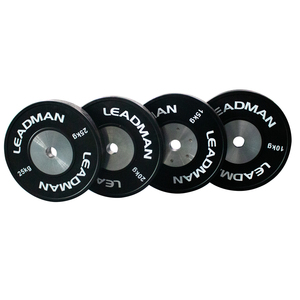
Heavy Duty KG LB Gym Training Coloured Rubber Competition Bumper Plates
Get a Quote
High Quality Commercial Indoor Air Bike Hot Sale Gym Studio Aerobic Exercise Wheel Wind Resistance Spinning Bike with Screen
Get a Quote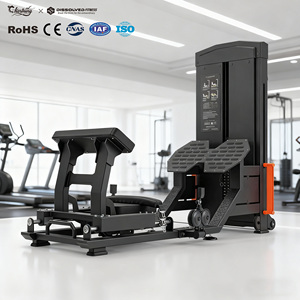
DISSOLVED Strength Machine Leg Extension Curl Hip Lift Thrust Steel Legs Chest Arms Commercial Gym Equipment Full Set
Get a Quote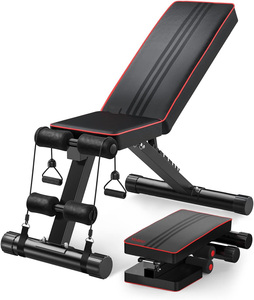
Adjustable Weight Bench - Utility Weight Benches for Workout Foldable Incline/Decline Bench Press for Home Gym
Get a QuoteExecutive Summary: The Rise of Motorless Curved Treadmills in New Zealand
The commercial fitness landscape across New Zealand is undergoing a structural transition. Fitness facility operators, functional training studios, high-performance athletic hubs, and commercial gym chains in metropolitan hubs such as Auckland, Wellington, Christchurch, and Hamilton are increasingly phasing out traditional motorized treadmills in favor of Self-Powered Curved Runner Treadmills. Driven by shifting consumer demand for athletic conditioning, rising energy tariffs, and an industry-wide mandate toward zero-carbon operations, non-motorized curved treadmills represent a quantum leap in facility performance and financial sustainability.
Unlike conventional motorized treadmills that force an unnatural stride pattern via a constant-speed motor belt, self-powered curved runners rely entirely on the runner’s kinetic input. The curved slat belt design utilizes gravity, user friction, and cadence to govern speed. This biomechanical shift not only delivers a 30% higher metabolic burn and superior posterior chain engagement, but it also eliminates electricity consumption entirely. For New Zealand gym operators facing high power overheads and demanding coastal climate conditions, acquiring self-powered curved treadmills from direct international suppliers and exporters offers substantial long-term competitive advantages.
Biomechanical Engineering & Slat Belt Kinematics
To appreciate the information gain provided by self-powered curved treadmills, one must examine the biomechanics of human gait. Traditional flat treadmills pull the user's lead foot backward, reducing hamstring activation and encouraging a heel-strike force vector that places excessive strain on the knee joints (patellofemoral joint stress).
Optimal 17-21° Arc Curvature
The precision-engineered curve creates a downward and backward kinetic arc. As the athlete steps up the curve, gravity assists belt movement, while pulling back engages the glutes and hamstrings naturally—mirroring outdoor track sprinting.
Vulcanized Rubber Slats
Constructed with high-tensile aircraft aluminum cores wrapped in heavy-duty vulcanized rubber, providing shock absorption that mitigates impact forces on ankles, shins, and spinal structures.
Zero Top Speed Limit
Motorized treadmills max out at 20-25 km/h. Self-powered runners allow elite rugby players and sprinters to reach unconstrained maximum velocity (35+ km/h) for true oversprint and maximum effort interval training.
Commercial Technology Comparison Matrix
Understanding the structural differences between cardio equipment types helps procurement teams allocate budget efficiently. The table below outlines key operational benchmarks:
| Performance Variable | Self-Powered Curved Runner | Traditional Motorized Treadmill | Dual-Action Air Bike |
|---|---|---|---|
| Power Source | 100% User Kinetic Drive (0 Watts) | AC Commercial Motor (2,000-4,000W) | 100% User Fan Drag (0 Watts) |
| Posterior Chain Activation | High (+32% Hamstrings / Glutes) | Low (Passive Belt Drag) | Moderate (Upper / Lower Quad Focus) |
| Annual Power Cost per Unit (NZD) | $0.00 NZD | $650 - $1,200 NZD / year | $0.00 NZD |
| Max Sprint Velocity | Unlimited (User Cadence Bound) | Capped (20-25 km/h limit) | RPM Resistance Bound |
| Maintenance Overhead | Near-Zero (No drive belts, motors, circuit boards) | High (Deck lubrication, motor brushes, PCB replacements) | Low-Moderate (Chain/Belt tensioning) |
| Primary Muscle Target | Glutes, Hamstrings, Calves, Core | Quadriceps, Calves | Full Body (Push/Pull + Leg Drive) |
Localized Application Scenarios Across New Zealand
The unique geographic and commercial environment of New Zealand presents specific demands for fitness equipment. From coastal humidity to high electricity rates in regional centers, self-powered curved runner treadmills deliver tailored solutions across diverse NZ sectors:
1. High-Performance Rugby & Sports Institutes
New Zealand’s sporting culture relies heavily on elite rugby strength and conditioning (S&C). Facilities servicing Super Rugby franchises, provincial unions, and high-performance regional sports hubs demand equipment capable of handling explosive acceleration and maximum velocity work without motor burnout. Curved runners accommodate heavy 110kg+ athletes undergoing high-intensity interval training (HIIT) with zero delay in belt response.
2. Commercial Boutique Studios (Auckland & Wellington)
Boutique functional fitness and athletic conditioning studios in urban markets like Ponsonby, Newmarket, and Wellington CBD face space constraints and high electrical utility rates. Fitting curved runners into group training zones allows instant transitions between floor exercises, free weights, and cardio intervals without waiting for motorized belts to accelerate or slow down.
3. Eco-Friendly Gym Initiatives & Off-Grid Facilities
Sustainability is a core brand pillar for many New Zealand businesses. Fitness centers seeking "Green Gym" certification or operating off-grid in regions like Queenstown, Wanaka, or Nelson benefit from equipment that consumes zero electricity. Highlighting a floor of self-powered cardio machines reinforces brand alignment with environmental values.
Enterprise Manufacturing Expertise & Supply Chain Strengths
Selecting a supplier for commercial fitness equipment requires evaluating manufacturing rigors, engineering lineage, and international supply chain infrastructure. Engineered in California and headquartered in Miami, Florida, USA (under Evolution Group USA), our manufacturing ecosystem brings decades of biomechanical research to every frame.
With engineering oversight led by industry veterans such as Roy Simonson, our equipment is built with heavy-gauge structural steel frames, precision robotic welds, and multi-stage electrostatic powder coatings. Our direct export model to New Zealand eliminates unnecessary intermediary markup, ensuring gym owners receive factory-direct wholesale pricing backed by global warranty coverage.
Full OEM / ODM Branding
We offer custom frame colorways, laser-cut logo plates, and custom-stitched vinyl upholstery for commercial gym chains, university sports complexes, and franchise networks throughout New Zealand.
Strict ISO & EN957 Compliance
Every curved treadmill unit undergoes factory load-testing exceeding 150,000 continuous running cycles, ensuring full structural compliance with European EN957 and international commercial safety standards.
Streamlined NZ Logistics
Direct door-to-port and door-to-door sea freight routing into the Port of Auckland, Port of Tauranga, and Lyttelton (Christchurch), managed by experienced international logistics coordinators.
New Zealand Procurement & Importation FAQ
Below are detailed answers to common questions raised by New Zealand gym owners, corporate buyers, and equipment distributors during the procurement process:
How are freight, customs clearing, and GST handled when importing treadmills to New Zealand?
We handle export documentation, commercial invoices, packing lists, and Certificate of Origin documents required by New Zealand Customs Service. Shipments landing in Auckland, Tauranga, or Lyttelton undergo standard customs clearance. Imports are subject to New Zealand Goods and Services Tax (15% GST) and applicable import tariffs, which can be processed directly via your customs broker or our logistics partners under CIF or DDP terms.
What maintenance is required for self-powered curved runner treadmills in coastal NZ environments?
Due to New Zealand's coastal maritime climate, corrosion resistance is paramount. Our curved treadmills feature powder-coated structural steel and sealed stainless steel precision ball bearings that shield internal mechanisms from ambient moisture and sweat. Maintenance involves periodic cleaning of the slat belt tracks, wiping down side rails, and inspecting belt tensioning—eliminating motor deck lubrication required by traditional electric treadmills.
What warranty coverage applies to commercial shipments in New Zealand?
Our commercial equipment carries robust structural warranty protection: 10 years on structural steel frames, 5 years on the slat belt structure and bearing assemblies, and 2 years on digital consoles and wear components. Replacement parts are dispatched via priority air freight to minimize facility downtime.
Can we order mixed containers combining curved treadmills with strength equipment?
Yes. We specialize in consolidated container loads (FCL 20ft/40ft HQ). You can combine self-powered curved runner treadmills with plate-loaded strength machines, pin-loaded selectorized units, power racks, adjustable benches, and urethane bumper plates into a single optimized export shipment.
Equip Your New Zealand Facility with Market-Leading Cardio Engineering
Whether you are fitting out a new commercial facility in Auckland, upgrading an established gym chain across the North & South Islands, or seeking direct factory-export pricing for regional distribution, our team provides technical guidance, CAD 2D/3D floor layout planning, and competitive wholesale quotes.