Global B2B Sourcing & Engineering Whitepaper
Commercial Plate-Loaded Strength Equipment: The Definitive Procurement, Biomechanics & Global Supply Chain Guide
An architectural, biomechanical, and financial roadmap for commercial fitness facility operators, global distributors, and equipment procurement directors seeking maximum asset longevity, optimized structural safety, and high-yield operational efficiency.
1. Executive Summary & Information Gain: Redefining Strength Flooring
In the modern commercial fitness landscape, high-volume athletic facilities, commercial gym chains, hotel wellness centers, and specialized sports performance institutes face an evolving challenge: maximizing member engagement and retention while containing long-term capital expenditure (CapEx) and operational maintenance costs (OpEx). At the center of this challenge lies the specification of commercial plate-loaded strength equipment.
Unlike pin-loaded selectorized machines—which utilize restricted cable paths, fixed weight stacks, and internal pulley resistance—plate-loaded strength machinery relies on direct leverage mechanics, heavy-duty structural steel pivot points, and user-selected Olympic weight plates. This architectural framework allows users to train with higher absolute loads while replicating natural, unconstrained human movement vectors.
This comprehensive technical guide delivers actionable insights beyond typical product marketing. Designed specifically for commercial buyers, architectural planning teams, and international equipment distributors, it analyzes structural steel specifications, iso-lateral converging biomechanics, total cost of ownership (TCO) models, and long-term global supply chain strategies.
Accelerate Your Commercial Facility Fit-Out
Consult directly with our engineering and procurement team to request custom 2D/3D CAD layouts, custom frame powder-coating specifications, and wholesale direct pricing schedules tailored for your regional facility launch.
Send an Inquiry →2. Biomechanical Engineering & Movement Vector Architecture
The primary technical differentiator of premium commercial plate-loaded strength equipment is its precise alignment with human functional anatomy. Inferior strength machinery forces the human skeletal frame into rigid, linear motion paths, causing dynamic joint impingement, unnatural shearing forces on ligaments, and sub-optimal target muscle recruitment.
Skelcore’s engineering standard—developed in California—prioritizes convergent and divergent leverage movement arcs that reflect how human muscle fibers contract across complex multi-planar joint axes.
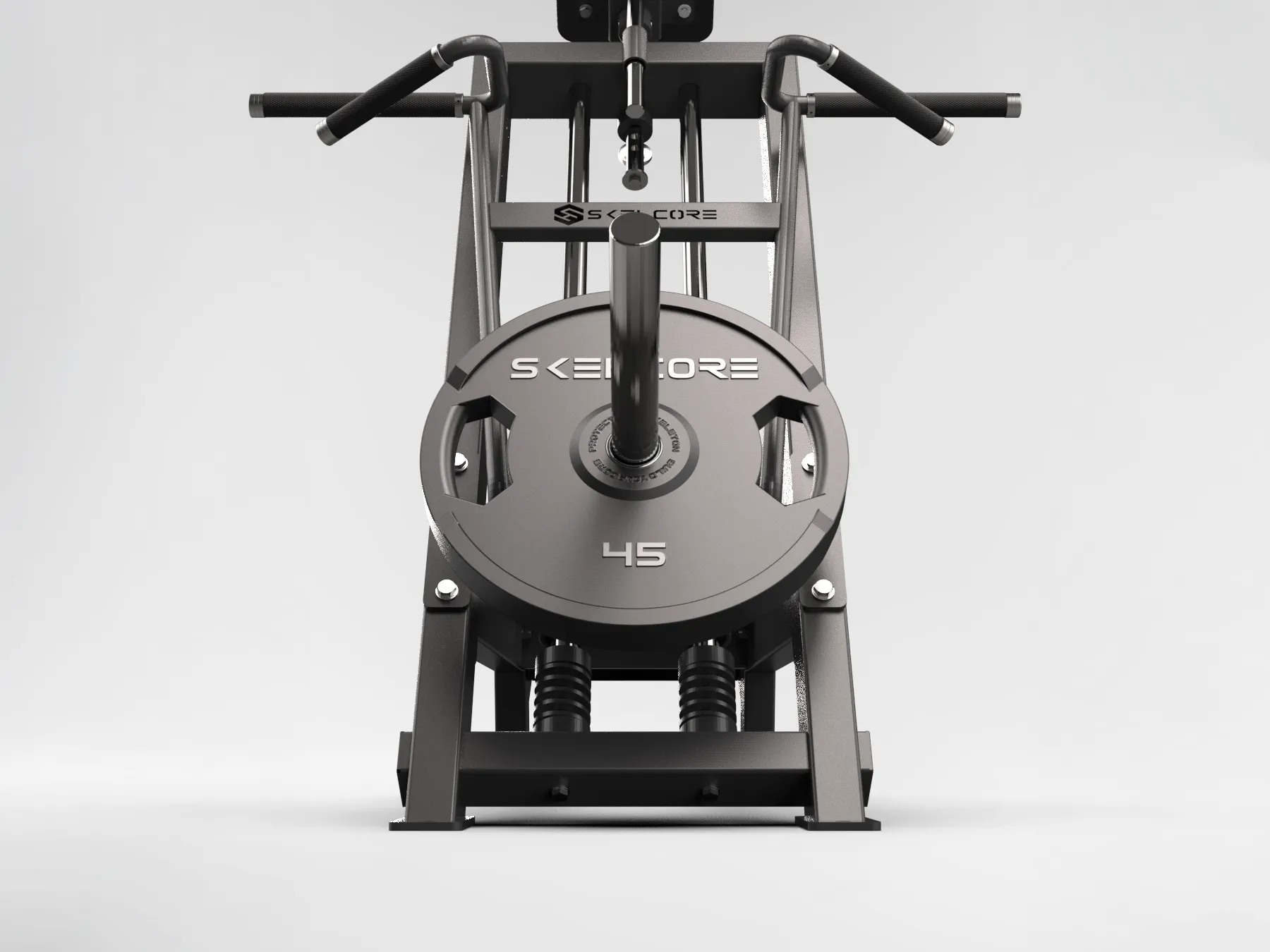
Iso-Lateral Movement
Independent lever arms prevent dominant side compensation and equalize muscular imbalances.
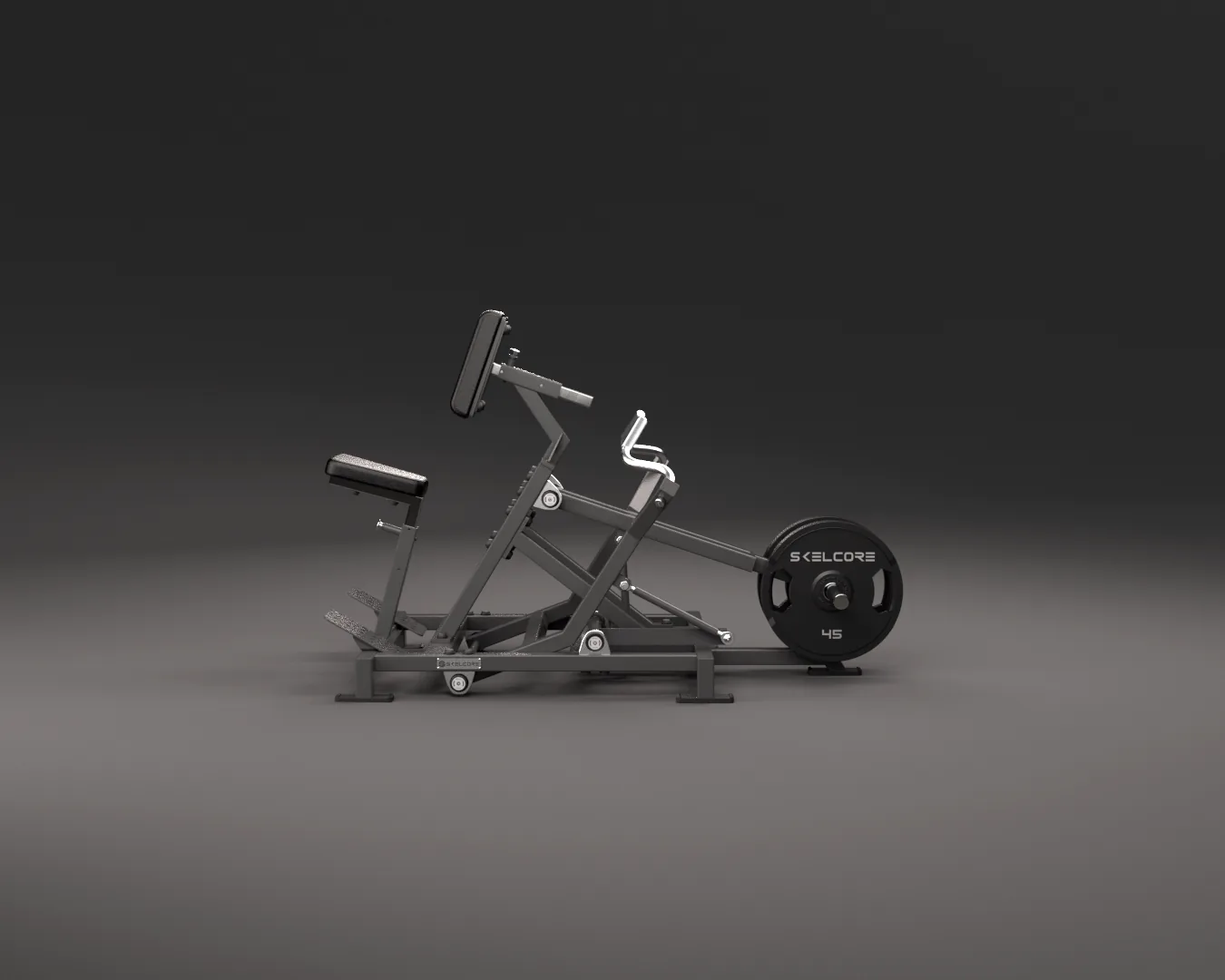
Converging Axes
Matches natural joint adduction and abduction during pressing and pulling motions.
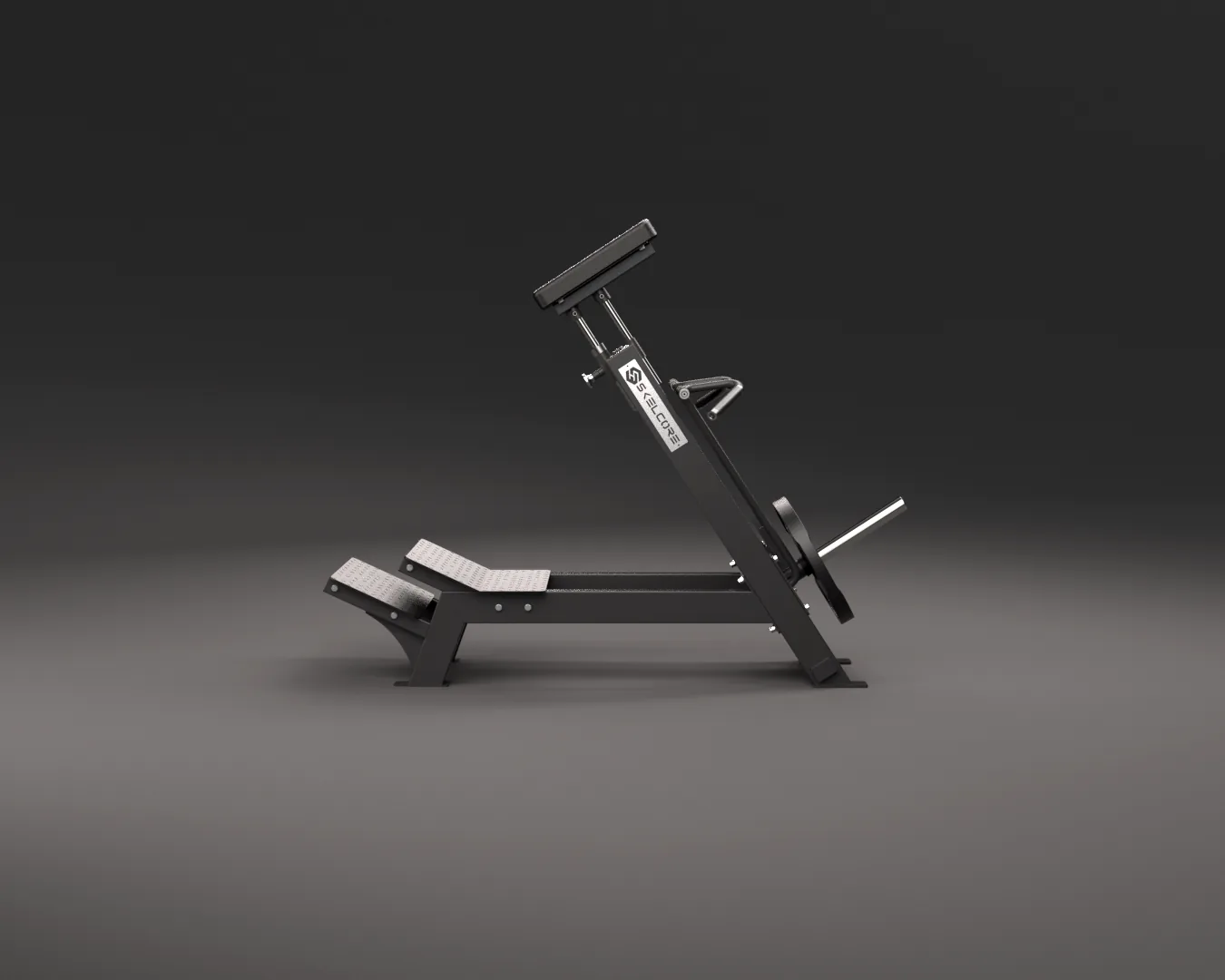
Leverage Curves
Optimizes torque profiles across the entire neuromuscular force-length relationship curve.
The Science of Converging and Diverging Axes
When performing a traditional flat barbell chest press, the distance between the hands remains strictly fixed throughout the entire range of motion. This fixed distance creates excessive torque at the glenohumeral joint during peak shoulder extension while reducing peak muscular tension on the pectoralis major at full extension. Premium plate-loaded chest machinery solves this structural limitation by employing converging pivot pathways:
- Starting Position (Maximum Stretch): The handles begin wider apart, allowing a deep, natural pectoral stretch without placing excessive tension on the anterior deltoid tendon insertions.
- Concentric Phase (Pressing Arc): As the user presses forward, the leverage handles arc inward toward the sternal midline, mirroring the natural anatomical adduction of the humerus.
- Terminal Peak Contraction: At full extension, the handles meet near the center, delivering maximal muscle fiber activation without requiring external joint stabilization from secondary synergist muscles.
Conversely, upper-body pulling machinery—such as chest-supported rows and lat pulldowns—utilize diverging axes. Handles start narrow near the sagittal plane and move outward as the elbows drive backward into scapular retraction. This path aligns precisely with the orientation of the latissimus dorsi and rhomboid muscle fibers, significantly lowering stress on the biceps brachii tendon and elbow joints.
Iso-Lateral Autonomy vs. Bilateral Mechanical Coupling
Bilateral machines lock both arms onto a single rigid shaft. If a user exhibits asymmetrical strength—a common issue resulting from neurological dominance, past injury, or sports-specific movement patterns—the dominant limb performs up to 70% of the mechanical work. Over time, bilateral machinery reinforces muscular compensation patterns and exacerbates kinetic chain dysfunction.
Iso-lateral plate-loaded machinery features completely independent structural arms. Each arm operates on its own dedicated bearing system, axle, and weight horn. Key advantages include:
- Equallized Muscular Recruitment: Forces both weak and strong limbs to work independently under equal gravitational resistance.
- Unilateral Athletic Training: Enables single-limb sport-specific training patterns (e.g., single-leg press, single-arm rowing) that mirror real-world movement mechanics.
- Dynamic Patterning: Allows alternating press/pull sequences that engage the core musculature and transverse abdominis for enhanced structural stabilization.
3. Structural Integrity: Material Science, Steel Metallurgy & Construction
The operational lifespan of commercial gym equipment depends heavily on underlying material selection and manufacturing quality. Equipment installed in high-density commercial facilities endures millions of stress cycles annually under immense static and dynamic loads. Skelcore designs strength platforms to withstand high-volume abuse without structural deformation, frame flexing, or joint failure.
Heavy-Gauge Steel Tubing Specifications
Commercial strength machinery frames are constructed from high-tensile structural steel tubing. Procurement officers should evaluate frame thickness using standard steel gauge ratings. Lower gauge numbers indicate thicker steel walls and superior torsional resistance.
| Steel Tubing Profile | Wall Thickness | Structural Integrity & Application Profile |
|---|---|---|
| 11-Gauge Structural Steel (3.0mm) | 3.0 mm (0.120 in) | Gold standard for heavy commercial plate-loaded frames, power racks, and leg presses. Handles dynamic loading up to 1,500 lbs (680 kg) without frame flex. |
| 12-Gauge Commercial Steel (2.75mm) | 2.75 mm (0.108 in) | Standard grade for mid-tier commercial selectorized lines and light-duty commercial benches. Reliable structural stability under moderate daily usage. |
| 14-Gauge Light-Duty Steel (2.0mm) | 2.0 mm (0.075 in) | Sub-standard grade reserved for residential or light corporate facilities. Prone to weld fracturing and frame twisting under heavy commercial load. |
Welding Metallurgy and Robotic Precision
Frame welds represent critical stress distribution points. Skelcore utilizes advanced precision robotic TIG (Tungsten Inert Gas) and MIG (Metal Inert Gas) welding processes. Continuous, full-penetration seam welds eliminate structural hot spots and prevent internal rust formulation. Every frame weld undergoes non-destructive load testing to ensure long-term structural safety under continuous commercial stress.
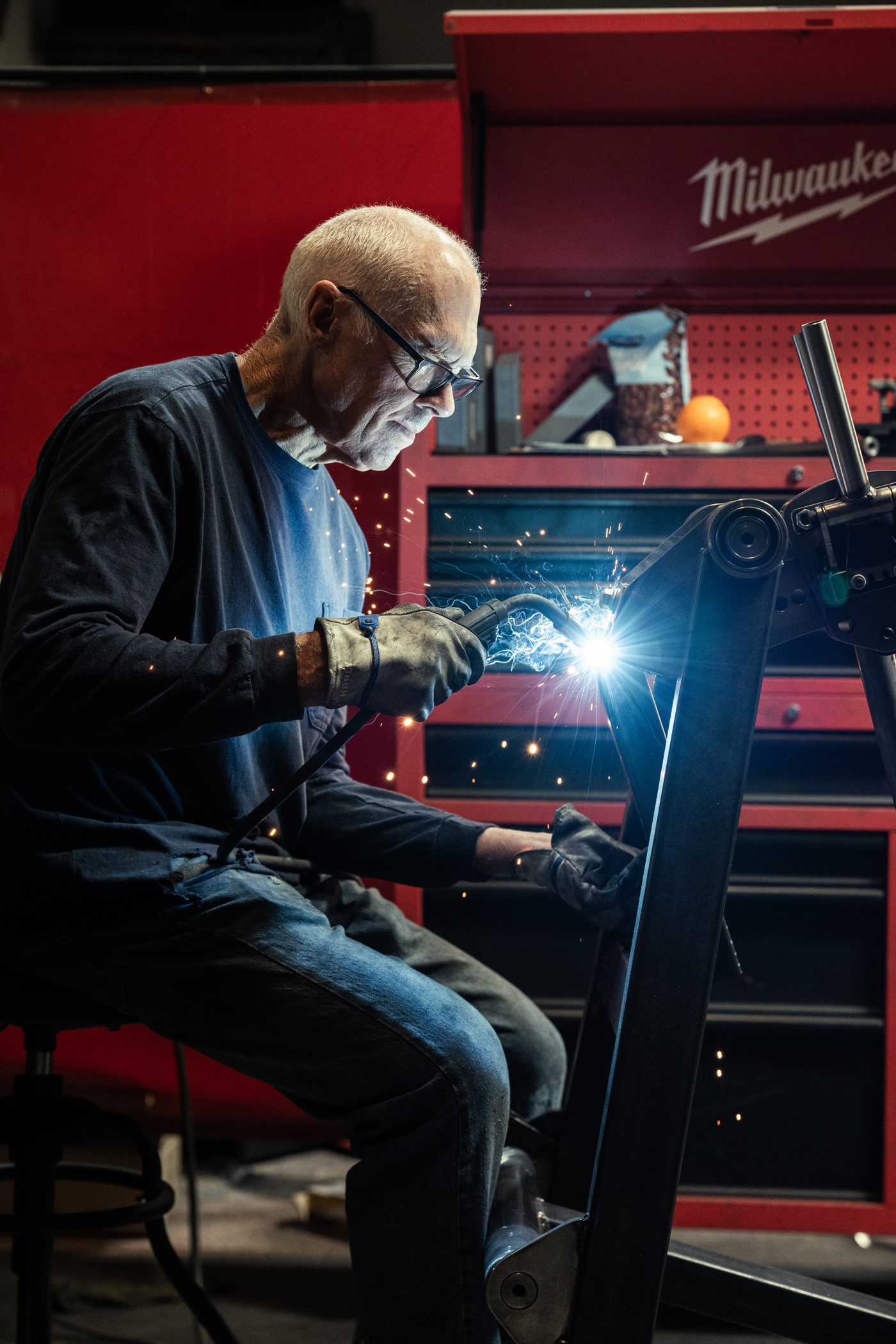 Workshop Engineering Standards
Crafted by Engineering Legends
Pioneered under the technical leadership of industry veteran Roy Simonson, Skelcore strength equipment integrates five decades of hands-on metallurgical design and biomechanical innovation. Our frames are built from heavy-duty 11-gauge steel tubing, precision-cut with industrial lasers, and hand-welded to guarantee lifetime structural durability on commercial gym floors.
Industrial Surface Finishes and Corrosion Protection
Gym environments present harsh corrosive conditions due to high humidity, ambient moisture, and continuous exposure to human perspiration. Skelcore applies a comprehensive multi-stage surface finishing system:
- Automated Shot Blasting: Raw steel frames are sandblasted to remove surface oxidation, mill scale, and microscopic contaminants, creating an optimal surface texture for powder adhesion.
- Zirconium Pre-Treatment Wash: An eco-friendly nano-ceramic wash coats the bare metal, providing an anti-corrosive barrier that outperforms traditional iron phosphate treatments.
- Electrostatic Powder Coating: Thermosetting epoxy-polyester powder coat is electrostatically applied and heat-cured at 200°C (392°F). This yields an impact-resistant finish that resists chipping, scratching, and chemical corrosion.
Pivots, Bearings, and Hardware Architecture
Smooth movement motion relies directly on internal pivot architecture. While lower-tier manufacturers use plastic bushings or cheap unshielded bearings that quickly develop mechanical play, Skelcore specifies high-precision, sealed industrial ball bearings and heavy-duty steel pivot axles:
- Double-Sealed Precision Bearings: Permanently lubricated and sealed against sweat, dirt, and dust intrusion, eliminating routine maintenance requirements.
- Solid Stainless Steel Axles: CNC-machined from solid high-carbon steel shafts to prevent axle shear under heavy leverage loads.
- Grade 8.8 & 10.9 Zinc-Plated Hardware: Commercial-grade structural fasteners with nylon locking nuts prevent frame loosening caused by recurring operational vibrations.
4. Comprehensive Product Portfolio: The Skelcore Advantage
A successful commercial fitness facility requires a balance of targeted strength machinery engineered to accommodate varied user demographics—from beginner gym members to elite professional athletes. Skelcore designs complete, integrated equipment suites that ensure visual brand cohesion, matched frame geometries, and identical upholstery across the entire commercial floor.
Upper Body Pressing & Pulling Machinery
Power Incline Chest Press
Features independent converging press arms, multi-position tactile grips, and adjustable seat back angle for targeted upper pectoral recruitment.
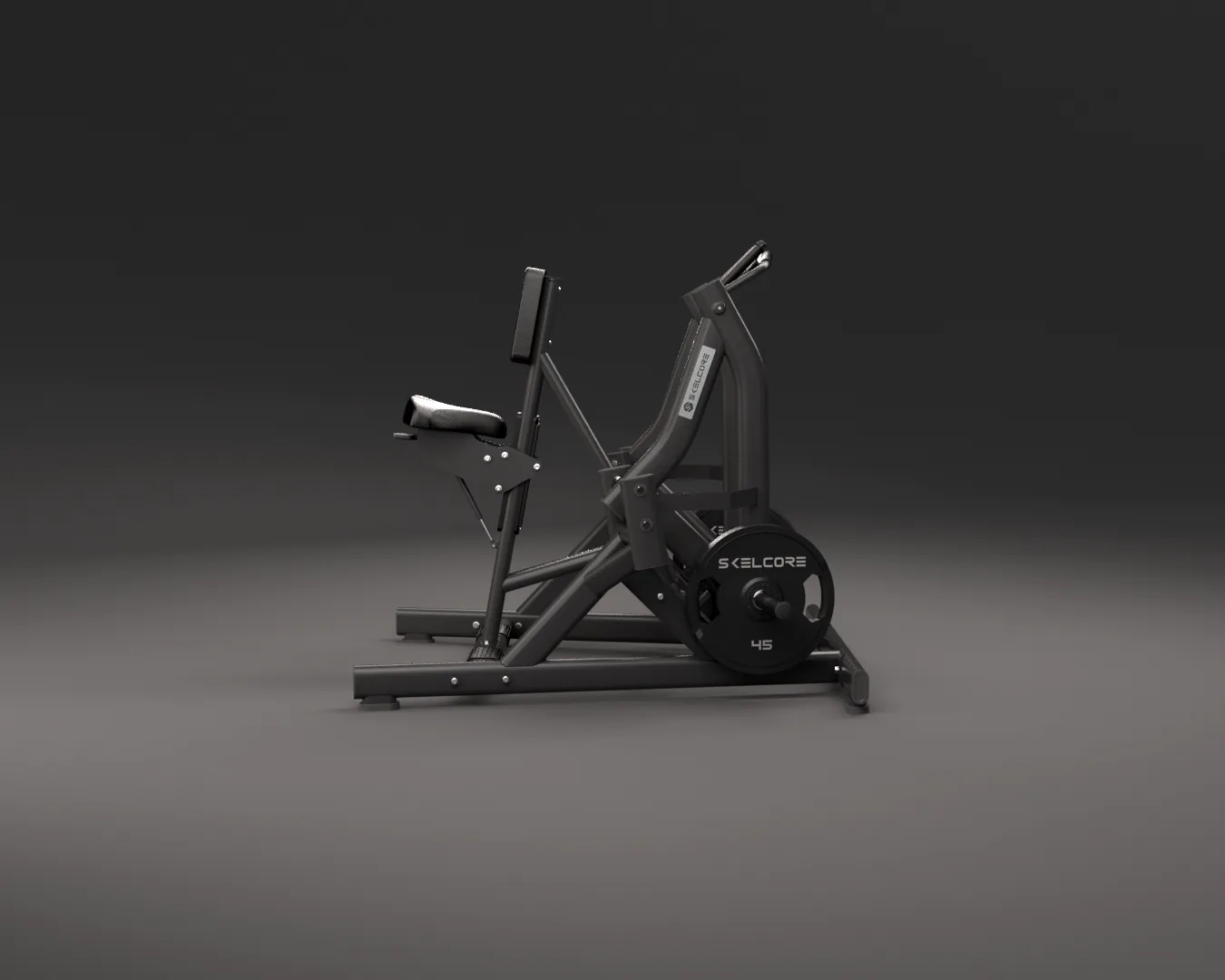
Pro Iso-Lateral Lat Pulldown
Utilizes diverging pulldown pathways with angled thigh-restraint pads, ensuring optimal latissimus activation without lower back compensation.
Pro Plus Overhead Shoulder Press
Designed with a slightly forward pressing angle to clear the shoulder joint capsule while isolating the anterior and lateral deltoid heads.
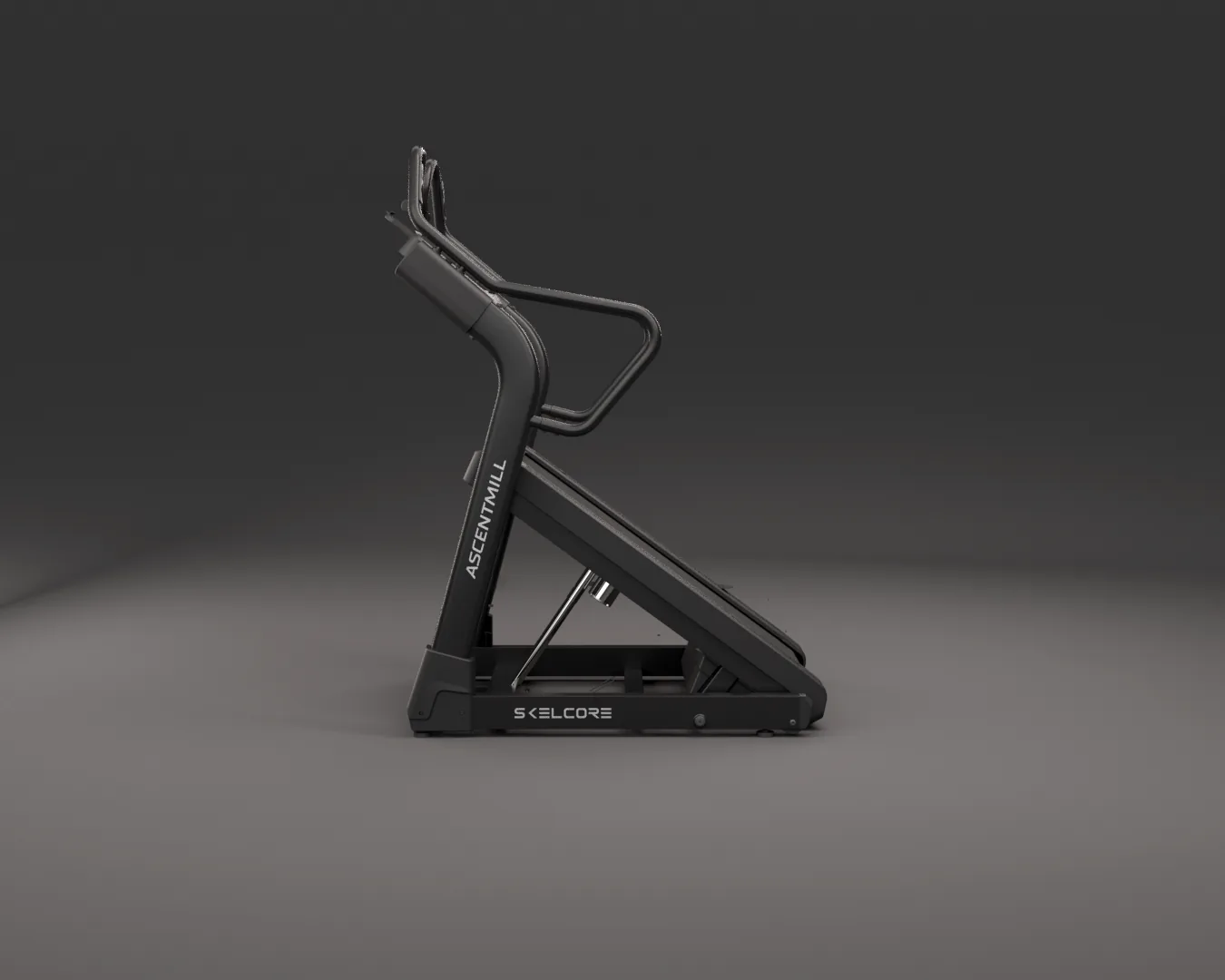
Linear Chest-Supported Row
High-density contoured chest pad supports the spine while converging rowing arms target mid-back thickness and scapular retractors.
Lower Body & Posterior Chain Platforms
Lower body strength training demands maximum load capacity and absolute structural rigidity. Faulty leg machinery poses significant liability risks due to the immense loads involved. Skelcore’s lower body plate-loaded range is engineered for total peace of mind:
- 45-Degree Commercial Leg Press: Features an ultra-heavy-duty 11-gauge steel carriage riding on industrial linear bearings and solid steel guide rods. Integrated quad-position safety stop catches protect users at deep knee flexion angles, while dual plate storage horns streamline plate loading.
- Hack Squat Platform: Maintains a smooth 45-degree movement angle with an oversized, non-skid aluminum footplate. This configuration allows users to adjust foot placement to target specific muscle groups—including quads, glutes, and hamstrings—while providing full lumbar support.
- Plate-Loaded Seated & Standing Calf Machines: Direct drive mechanical linkages isolate the soleus and gastrocnemius muscles without applying spinal compression load.
- Glute Thrust & Hip Extension Machines: Biomechanically optimized to accommodate heavy hip thrust movements with padded waist belts and anti-slip foot platforms, supporting the growing demand for dedicated posterior chain training spaces.
Free-Weight Foundation: Benches, Racks & Integrated Storage
A cohesive strength training floor requires dedicated free-weight support structures that match the visual and structural design of the primary plate-loaded equipment suite.

Heavy-Duty Adjustable Benches
Laser-cut ladder adjustment slots, high-density antimicrobial vinyl upholstery, and integrated transport wheels for versatile facility use.
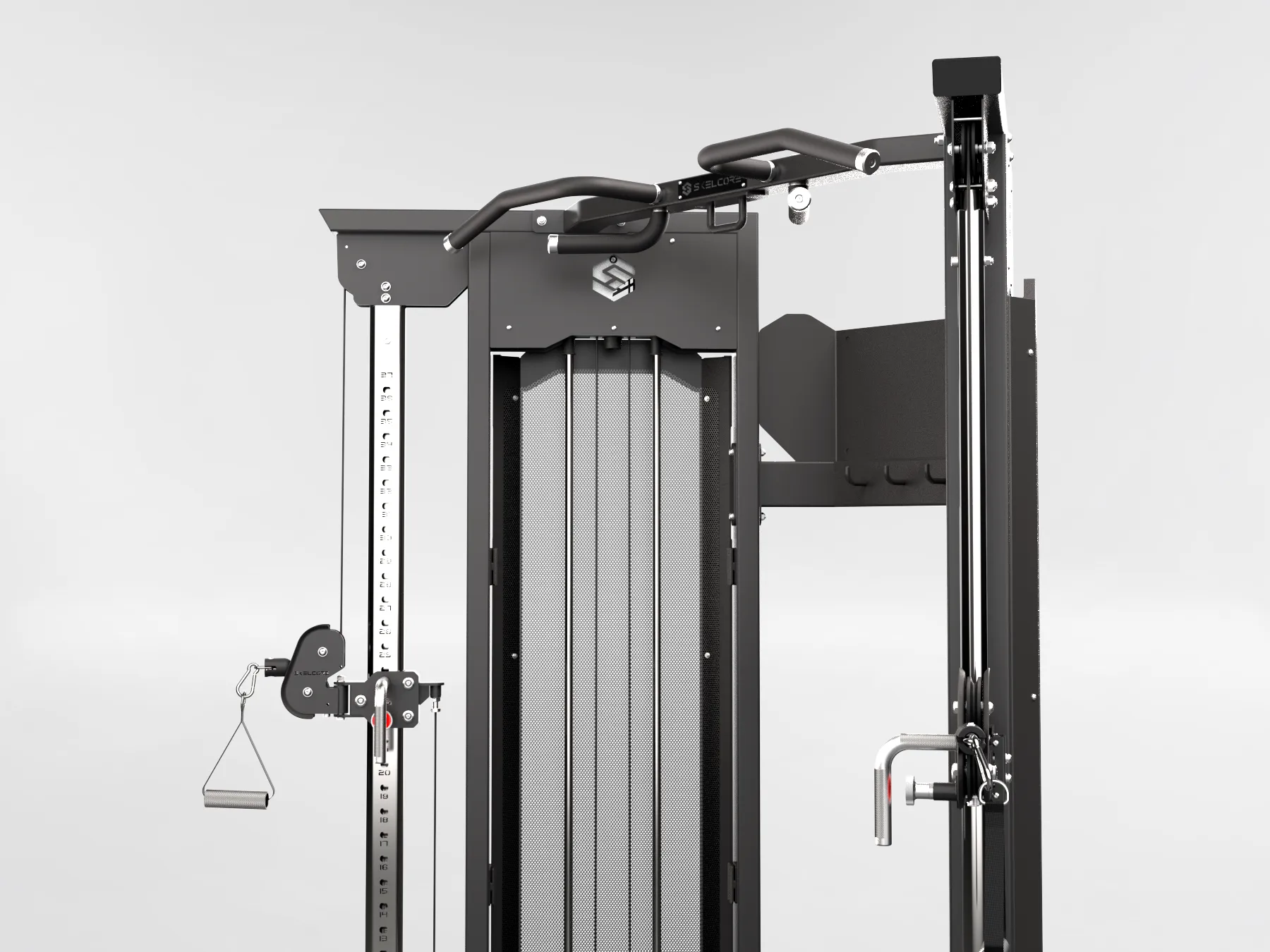
Commercial Power Racks
Built with 3x3-inch 11-gauge steel uprights, high-impact polyurethane J-hooks, dual safety spotter arms, and multi-grip pull-up bars.
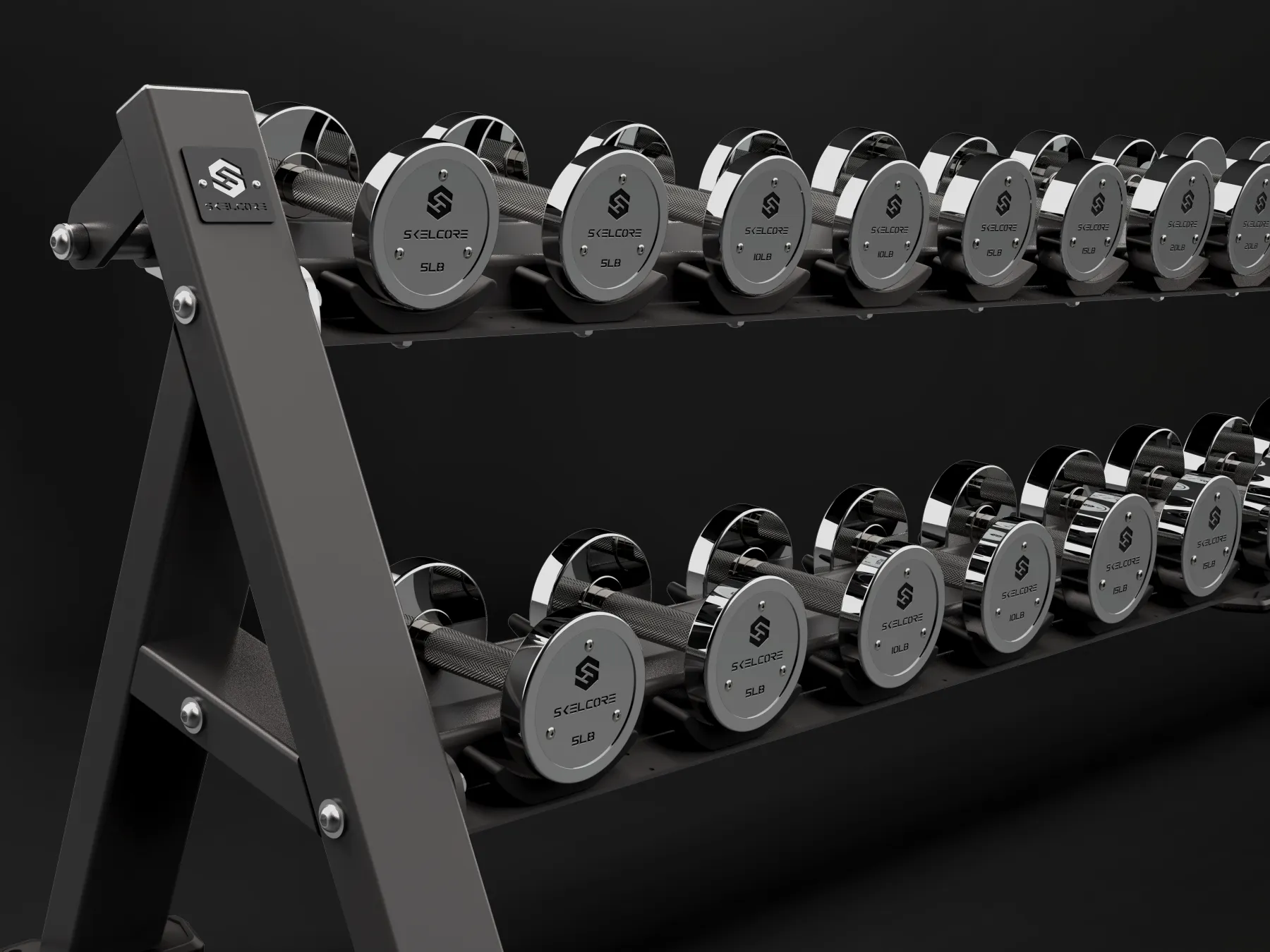
Heavy Dumbbell & Weight Storage
Multi-tier angled saddle racks and plate trees designed to keep free-weight floors safe, organized, and compliant with safety codes.
5. Total Cost of Ownership (TCO) & Commercial Procurement ROI
When evaluating strength equipment contracts, commercial procurement managers often make the mistake of evaluating initial purchase price (CapEx) in isolation. However, experienced facility directors look at the Total Cost of Ownership (TCO) calculated over a 7-to-10-year operational lifecycle.
Plate-Loaded vs. Pin-Loaded Selectorized Financial Breakdown
Plate-loaded machinery offers unique structural and financial advantages compared to complex pin-loaded selectorized equipment:
- Fewer Wear-and-Tear Components: Selectorized units rely on internal steel cables, nylon pulleys, weight stack selector pins, and internal guide rod bushings. These parts require routine lubrication, tension adjustments, and periodic replacement. Plate-loaded units eliminate cables and pulleys entirely, drastically reducing routine maintenance expenses (OpEx).
- Infinite Load Scalability: Selectorized machines are structurally limited by fixed weight stacks (e.g., 200 lbs / 90 kg max). If advanced members exceed this stack, the machine loses utility. Plate-loaded equipment allows users to load weight up to structural horn capacity (often exceeding 1,000 lbs / 450 kg), easily accommodating both novice members and elite athletes on the same footprint.
- Higher Equipment Resale Value: Due to their heavy 11-gauge steel construction and minimal mechanical fail points, high-quality plate-loaded machines retain significantly higher secondary market value when facilities refresh their equipment inventory.
| Evaluation Metric | Commercial Plate-Loaded Equipment | Pin-Loaded Selectorized Machines |
|---|---|---|
| Primary Drive Mechanism | Direct Steel Pivot Arms & Heavy Bearings | Steel Aircraft Cables, Pulleys & Guide Rods |
| Maintenance Frequency | Low (Quarterly bearing check & pad wipe down) | High (Monthly cable inspection, guide rod oiling) |
| Mechanical Failure Risk | Near Zero (No cables to snap or stack pins to bend) | Moderate (Cable fraying, pulley wear, stack binding) |
| Custom Branding Versatility | High (Frame colors, plate horn placement, pads) | Moderate (Shrouds and upholstery customization) |
| Average Lifespan (Commercial) | 12 – 15+ Years (Structural frame) | 7 – 10 Years (Requires cable/pulley refreshes) |
Floor Space Yield Optimization (Square Meter Throughput)
Gym revenue is directly tied to member throughput during peak operational hours (typically 5:00 PM to 8:00 PM). If members wait in long queues for popular machinery, member satisfaction drops and churn increases. Plate-loaded machines optimize floor throughput in two ways:
- Rapid Work-In Transitions: Members loading their own weight plates can switch sets in seconds without having to adjust weight pins or reposition seat settings, keeping floor flow active.
- Integrated Plate Storage Horns: Skelcore equipment incorporates stainless steel weight storage pegs directly onto machine frame uprights. This eliminates the need for standalone plate trees, freeing up valuable square footage for additional training stations or functional movement space.
6. Industry Trends & Future Market Outlook
The commercial fitness sector is undergoing rapid evolution driven by shifting demographics, training styles, and commercial facility business models. Procurement directors must stay ahead of key trends shaping the future of strength floor design:
The Hyper-Growth of Strength-Focused Training
Over the past five years, consumer preferences have shifted significantly away from cardio-dominated floor layouts toward dedicated strength training environments. Driven by functional fitness trends, bodybuilding culture, and evidence-based strength research, commercial facilities are reallocating up to 60-70% of total floor space to free weights and plate-loaded machinery.
Custom Commercial Branding & Aesthetic Floor Design
In an age dominated by social media marketing, a gym's physical aesthetics play a vital role in member acquisition. Multi-location commercial chains and franchise operators require uniform aesthetic themes across every location. Skelcore provides tailored manufacturing options, including:
- Custom Frame Powder-Coating: Exact RAL color matching to align with corporate brand guidelines.
- Laser-Cut Metal Brand Plates: Customized steel branding plates welded directly to main frame structures.
- Premium Upholstery Stitching: Double-stitched commercial vinyl available in custom colorways with custom embroidered logos.
Hyper-Specialization in Posterior Chain Machinery
General strength machines are increasingly being supplemented by specialized niche machinery. Modern facility layouts prioritize targeted equipment—such as belt squats, standing abductors, pendulum squats, and elevated hip thrust stations—to meet strong member demand for lower-body and posterior chain development.
7. Comprehensive Buyer FAQ: Addressing Technical & Sourcing Queries
Below are detailed answers to the most common technical, logistical, and architectural questions submitted by global buyers, procurement agencies, and facility owners when specifying commercial plate-loaded strength equipment.
What steel gauge and structural specifications should I require for high-traffic commercial plate-loaded equipment?
For high-traffic commercial environments, specify 11-gauge (3.0mm wall thickness) structural steel tubing as the absolute minimum standard for primary load-bearing frames. Tubing profiles should measure at least 50x100mm (2x4 inches) or 75x75mm (3x3 inches). Ensure all frame welds are continuous robotic TIG/MIG seams, and that pivot assemblies utilize double-sealed precision ball bearings housed in CNC-machined steel blocks rather than plastic or bronze bushings.
How do iso-lateral plate-loaded machines compare to traditional fixed bilateral machines in commercial facility applications?
Iso-lateral plate-loaded machines feature completely independent movement arms. This design forces each side of the body to lift its load independently, preventing a dominant arm or leg from compensating for a weaker one. In a commercial setting, iso-lateral machines reduce injury risks, support asymmetrical rehabilitation training, and deliver superior muscle isolation, making them highly attractive to both beginner members and advanced athletes.
What architectural floor loading and spatial clearances are required for heavy plate-loaded strength zones?
Heavy commercial plate-loaded machinery (such as 45-degree leg presses or hack squats) can reach total operating weights of 1,200 kg (2,640 lbs) or more when fully loaded with weight plates. Commercial facility floor slabs should be rated for a minimum live load capacity of 5.0 kN/m² (approx. 100 lbs/sq.ft). Architecturally, allow a minimum perimeter clearance of 1.0 to 1.2 meters (3 to 4 feet) around each machine to enable safe weight plate loading and unhindered movement flow.
How does plate-loaded equipment reduce long-term operational maintenance costs (OpEx) for commercial operators?
Plate-loaded machinery eliminates internal steel aircraft cables, nylon pulleys, plastic weight stack shrouds, and selector pins—all of which are common fail points on selectorized equipment. With fewer moving parts, maintenance is largely reduced to periodic bearing inspections, fastener torque checks, and upholstery cleaning. This significantly lowers ongoing replacement part costs and keeps equipment active on the floor without extended maintenance downtime.
What customization options are available for franchise chains looking to maintain brand consistency?
Skelcore offers comprehensive factory-direct customization for franchise chains and commercial networks. This includes custom electrostatic frame powder-coating (matching specific RAL brand colors), laser-cut logo plates integrated into main structural uprights, and custom-colored double-stitched commercial vinyl upholstery with embroidered brand logos. Custom specifications are documented during the pre-production phase to ensure exact consistency across worldwide site roll-outs.
What warranty coverage and spare parts support does Skelcore provide for international B2B projects?
Skelcore equipment comes backed by a comprehensive commercial warranty program: Lifetime structural steel frame coverage, 5-year coverage on rotary bearings and mechanical pivot assemblies, 1-year coverage on cables, pulleys, and linear bearings, and 6-month coverage on upholstery and wear items. Spare parts orders are coordinated directly through our Miami headquarters and dispatched via our global distributor network to ensure minimal operational downtime.
How can international buyers request custom CAD floor planning and direct wholesale quotations?
Global buyers can submit architectural building plans (DWG/CAD formats or scaled PDF floor plans) directly to Skelcore's engineering team. We provide 2D dynamic spatial layouts and 3D virtual floor renders to optimize machine placement, traffic flow, and zoning safety. To start the process, click the "Send an Inquiry" button on this page to connect directly with our global sales engineering team.
Partner with Skelcore for Your Global Facility Fit-Out
Whether you are outfitting a single premium commercial gym, developing a luxury hotel fitness center, or managing a nationwide franchise expansion, Skelcore delivers high-performance strength equipment built to your brand's exact standards.
Contact our Miami headquarters today to speak with an experienced project manager, request technical specification sheets, and receive a factory-direct commercial quotation.
Send an Inquiry →