Flagship Commercial HIIT & Strength Equipment
Engineered for high-volume commercial fitness centers, boutique functional studios, and global franchise gym networks. Built to ISO9001 and EN957 heavy-duty standards.
Executive White Paper: OEM/ODM Commercial HIIT Equipment Manufacturing Architecture
In the contemporary global fitness economy, High-Intensity Interval Training (HIIT) has evolved from a niche conditioning modality into a cornerstone of commercial gym revenue models. Enterprise club operators, boutique studio franchises, and international equipment distributors face unprecedented pressure: facilities require conditioning machinery capable of enduring 14 to 18 hours of uninterrupted daily member usage while maintaining flawless biomechanical precision and structural integrity. Selecting an elite OEM/ODM Commercial HIIT Equipment Factory is no longer merely a procurement exercise—it is a strategic decision directly impacting total cost of ownership (TCO), brand reputation, safety liability, and member retention rates.
This industry specification report examines the essential technological framework, manufacturing tolerances, supply chain logistics, and engineering benchmarks required by tier-1 commercial fitness facilities. Grounded in California biomechanical engineering standards and supported by global distribution operations in Miami and worldwide hubs, this document establishes the criteria for high-performance OEM/ODM partnerships.
1. Biomechanical Engineering & Structural Manufacturing Standards
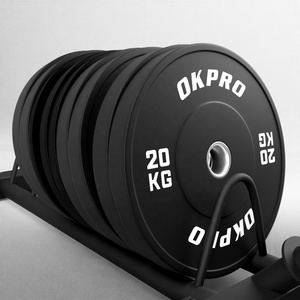
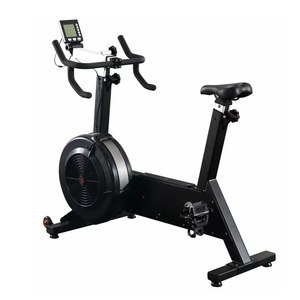
Commercial-grade HIIT machinery—spanning wind-resistance air bikes, self-powered curved runners, multi-station cable jungles, pin-loaded selectorized units, and heavy-duty plate-loaded stations—operates under dynamic shock loads drastically higher than standard cardio or strength equipment. When an athlete transitions into an explosive 30-second air bike sprint or a max-effort cable wood-chop, torque spikes dynamically test every frame weld, drive chain link, bearing race, and pulley assembly.
Leading OEM/ODM production facilities implement strict structural engineering protocols to mitigate fatigue failure:
• Structural Steel Gauge Specifications: Standard residential and light-commercial equipment relies on 1.5mm to 2.0mm structural tubing. Premium commercial OEM manufacturing mandates cold-rolled structural steel tubing ranging from 11-gauge (3.0mm) to 8-gauge (4.0mm) thickness. Frame structures utilize 50mm x 100mm oval or rectangular tubing, robotic MIG welded to ensure 100% penetration and zero structural voids.
• Electrostatic Powder Coating Architecture: Environmental degradation from perspiration, humidity, and intensive chemical sanitation requires a minimum multi-stage surface treatment. Top-tier factories utilize an 8-stage automatic zinc phosphate pre-treatment bath, followed by dual-layer electrostatic thermosetting powder coating (120-180 microns total thickness) baked at 200°C. This guarantees salt-spray corrosion resistance exceeding 500 hours under ASTM B117 testing standards.
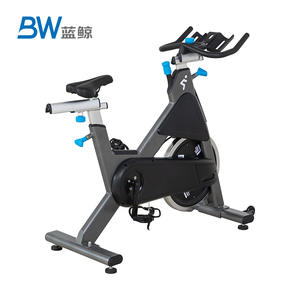
• Heavy-Duty Bearing & Transmission Mechanics: Fan air bikes and spin bikes must endure extreme rotational kinetic energy. Factory specs demand Japanese NSK or SKF double-sealed industrial bearings paired with 5PK/8PK automotive-grade poly-V belts or reinforced pitch chains, eliminating slippage and maintaining near-silent operation under peak wattages (2000W+ output capacity).
2. Product Innovation & OEM Customization Ecosystem
Modern commercial operators cannot build market distinction using off-the-shelf, non-customized equipment. Modern procurement demands complete brand ecosystem integration. Advanced ODM factories offer flexible structural modularity, enabling enterprise buyers to modify frame geometry, mechanical leverage ratios, visual aesthetics, and integrated technology.
Bespoke Brand Customization
Full-color frame powder matching (RAL spectrum), custom laser-cut brand shields, embossed marine-grade vinyl upholstery, and customized shroud graphics designed to enforce institutional brand guidelines across 100+ sites.
Digital & Telemetry Integration
Custom OEM console engineering featuring dual-protocol ANT+ and Bluetooth Smart connectivity, real-time watt tracking, heart-rate zone telemetry, and API integration for gym management software systems.
Biomechanical Customization
Engineered movement paths designed alongside industry veterans (such as engineering leadership with 50+ years of biomechanical design history), refining pivot points to match human strength curves and eliminate joint impingement.
3. 2026–2030 Commercial HIIT Equipment Procurement Trends
Global fitness facility purchasing vectors demonstrate a profound shift in intent. Analysis of enterprise RFP documents and search intent data reveals four macro procurement trends shaping factory manufacturing requirements over the next decade:
Trend A: Iso-Kinetic Air & Dual Magnetic Hybrid Resistance Systems
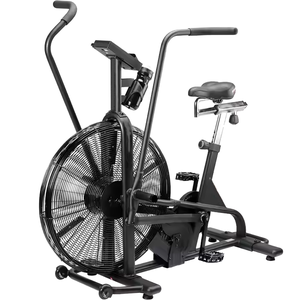
Traditional single-resistance machines are rapidly being superseded by hybrid conditioning units. Commercial buyers are requesting fan bikes and rowers that combine exponential air resistance (which scales endlessly with user effort) with multi-stage magnetic resistance brakes. This dual mechanism allows operators to utilize a single machine for both high-wattage aerobic HIIT intervals and low-cadence strength-endurance conditioning, maximizing floor space ROI.
Trend B: Space-Saving Footprint & Multi-Station Jungle Versatility
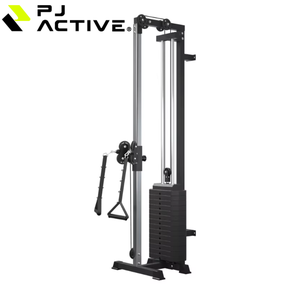
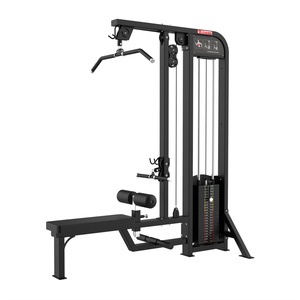
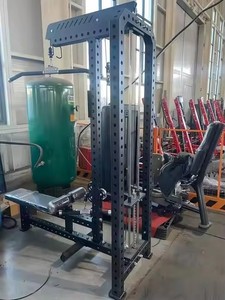
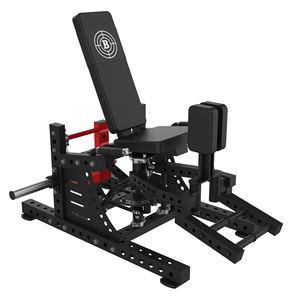
With urban real estate costs at all-time highs, gym owners require maximum member capacity per square meter. Equipment like 8-station cable jungles, wall-mounted functional cable crossover trainers, and dual-functional strength stations (such as combined Lat Pulldown/Seated Row or Hip Abductor/Adductor units) are experiencing over 35% higher procurement priority compared to single-purpose isolation machines.
Trend C: Zero-Power Self-Driven Ergonomics
Grid-independent equipment reduces electrical infrastructure costs during facility construction while lowering ongoing operational utility expenses. Non-motorized curved runner treadmills and wind-driven air bikes require zero external power outlets, allowing flexible floor layout adjustments and supporting corporate sustainability mandates.
Trend D: High-Tech Ergonomic Upholstery & Anti-Microbial Materials
Post-pandemic sanitation expectations have elevated upholstery standards. Premium OEM specs now stipulate high-density cold-molded PU foam cores encased in heavy-duty, anti-microbial, anti-fungal, double-stitched synthetic leather resistant to sweat corrosion, tears, and harsh UV/chemical cleaners.
4. Total Cost of Ownership (TCO) & Supply Chain Integrity
When purchasing commercial fitness equipment directly from OEM/ODM factories, procurement teams must look beyond initial unit costs. A low FOB purchase price can quickly be negated by frequent warranty claims, missing spare parts, high shipping container volume inefficiencies, or structural downtime that alienates club members.
A reliable manufacturing partner must provide robust supply chain and quality assurance systems:
1. Pre-Shipment Quality Control (QC): 100% functional dynamic load testing of every selectorized pin-stack, cable tension run, electronic console, and resistance fan assembly prior to packaging.
2. Standardized Component Interchangeability: Designing modular spare parts ecosystems (cables, pulleys, pop-pins, resistance belts, linear bearings) that allow local distributor service teams to fix issues within 24–48 hours.
3. High-Density Freight Packaging: Utilizing customized flat-pack steel crate framing and high-density foam padding to maximize container load factor (CBM utilization) while preventing transit damage during transoceanic shipping.
Our Manufacturing & Brand Ecosystem Advantage
Combining California design leadership with global logistics infrastructure to power commercial fitness spaces worldwide.
California Design & Miami HQ
Engineered with biomechanical precision in California and backed by executive administration, customer service, and master warehousing headquartered in Miami, Florida, USA.
Global Footprint in 60+ Nations
Equipping commercial facilities, hotel fitness centers, municipal installations, and boutique studios across North America, Europe, the Middle East, Asia-Pacific, and Latin America.
Trusted by Top Tier Chains
Proven durability in extreme-use commercial environments, supplying fitness brands including Gold's Gym, Crunch Fitness, UFC Gym, EOS Fitness, 24 Hour Fitness, YMCA, and Planet Fitness partner networks.
Frequently Asked Questions (FAQ) for Commercial Procurement
Detailed technical and commercial guidance for enterprise gym owners, procurement directors, distributors, and facility planners.
Q1: What are the standard Minimum Order Quantities (MOQ) for OEM/ODM commercial HIIT equipment orders?
For standard production runs under our established commercial equipment series, MOQs typically start at a single 20ft container mix (approx. 15-25 mixed cardio and strength units). For full custom ODM tooling, custom frame extrusions, or proprietary console software development, MOQs are determined on a project-by-project basis following CAD layout approval.
Q2: How do your factories ensure biomechanical accuracy and safety compliance?
All equipment undergoes rigorous 3D CAD stress analysis (FEA - Finite Element Analysis) during design. Physical prototypes are tested through 100,000+ cycle automated mechanical stress rigs before mass production. Our factory production complies with international commercial gym safety standards including ISO20957 and EN957 Class S (Studio/Commercial Use), holding CE, RoHS, and ISO9001 certifications.
Q3: Can frame colors, upholstery, and laser-cut branding be customized to match our franchise identity?
Yes, complete facility branding is a core OEM/ODM competency. We offer full powder-coating customization across the complete RAL color palette, dual-tone textured upholstery with custom color stitching, laser-etched stainless steel logo plates, and customized digital boot screens on smart consoles to ensure brand alignment across all locations.
Q4: What are the lead times for enterprise volume production and international delivery?
Standard factory production lead times range between 30 to 45 calendar days upon deposit confirmation and spec approval. International ocean freight timelines vary by destination port (typically 14-25 days for North America, 20-35 days for Europe and Middle East). Expedition options are available for urgent commercial chain rollouts.
Q5: What warranty coverage and spare parts support are provided for high-traffic commercial facilities?
Our commercial warranty program provides structural steel frame coverage up to 10 years, 2 to 3 years on rotary bearings, weight stack plates, and cable pulley mechanisms, and 1 year on wear items such as upholstery and rubber grips. Fast-moving spare parts kits are shipped with primary container orders to ensure immediate local maintenance availability.
Q6: How do self-powered air bikes and curved treadmills perform compared to motorized alternatives in HIIT zones?
Self-powered HIIT equipment offers distinct advantages for interval training. With zero motor latency, users can instantly transition from a complete standstill to a maximum-effort sprint without waiting for a treadmill motor to ramp up speed. Additionally, non-motorized equipment burns up to 30% more calories through user-driven belt acceleration, eliminates electrical wiring costs, and reduces electrical maintenance issues.
Partner with a Lead Commercial OEM/ODM Manufacturer
Whether you are building a new commercial club chain, upgrading an existing studio layout, or seeking regional distribution rights, our project engineering team is ready to deliver tailored equipment solutions.