1. Technical Architecture & Industrial Paradigm of Curved Runner Treadmills
The commercial fitness industry is undergoing a structural transition from motorized cardio equipment to self-powered, biomechanically intuitive platforms. As international gym chains, boutique HIIT studios, and athletic performance centers prioritize operational energy efficiency, reduced maintenance overhead, and functional movement metrics, China’s tier-one fitness equipment manufacturing hub has emerged as the global epicenter for high-precision curved treadmill engineering and export execution.
A curved runner treadmill operates on a non-motorized, user-driven kinetic transfer principle. Unlike traditional motorized treadmills that enforce a constant belt speed driven by an electric motor, the curved runner utilizes a precision-engineered arcuate deck (typically angled between 17 and 22 degrees of optimal curvature). The runner's mass and foot-strike positioning generate gravity-assisted momentum. Foot strikes occurring ahead of the center of gravity accelerate the belt, while moving back toward the rear curve smoothly decelerates it. This creates an infinite, instantaneous speed range completely governed by athlete exertion.
2. Engineering Standards & Material Specifications Matrix
Leading Chinese manufacturers leverage industrial-grade material selection and automated CNC fabrication to guarantee high-duty durability under peak commercial stress (24/7 facility usage). Below is an analytical breakdown comparing commercial-grade curved runner specifications against mid-tier standard cardio machines.
| Engineering Parameter | Commercial Curved Runner (Pro / OEM Grade) | Standard Motorized Treadmill | Engineering Implication / Information Gain |
|---|---|---|---|
| Drive Mechanism | User-Powered Slat Belt / 112+ Precision Bearings | 3.0 - 6.0 HP AC Induction Motor | Eliminates motor burnout risk and expensive PCB failures. |
| Slat Construction | High-Impact Vulcanized Rubber over Molded Composite | Multi-ply PVC Belt over MDF Deck | Rubber slats provide superior grip, zero deck friction heat, and high impact damping. |
| Frame Material | Q235 Heavy-Duty Steel Chassis (3.0mm - 4.0mm wall thickness) | 1.8mm - 2.5mm Standard Steel Frame | Prevents structural torsion during explosive high-wattage athletic sprints. |
| Resistance Control | Multi-Level Magnetic Resistance Array (Lever Adjustment) | Electronic Incline / Digital Speed Control | Magnetic eddy-current braking creates sled-push load simulation up to high resistance. |
| Bearing Quality | Sealed ABEC-7 / 608zz Precision Ball Bearings | Standard Front/Rear Deck Rollers | Delivers ultra-smooth belt glide with near-silent kinetic acoustic profile (<65 dB). |
| Max User Weight Capacity | 200 kg (440 lbs) - 230 kg (507 lbs) | 150 kg (330 lbs) max | Engineered for elite powerlifters, heavyweight athletes, and high-impact commercial abuse. |
3. Product Development & Technological Trends (2025–2030)
The design language and feature set of non-motorized curved treadmills are evolving rapidly. Driven by buyer intent data from top global fitness chains in North America, Europe, and the Asia-Pacific region, manufacturers are incorporating advanced biomechanical telematics and structural innovations into next-generation production lines.
A. Smart Telemetry & Multi-Protocol Connectivity
While the mechanical movement remains unpowered, modern gym users expect digital tracking precision. 2025+ generation curved runners integrate low-power Bluetooth (BLE 5.3), ANT+, and NFC wireless consoles. These systems measure real-time power output in Watts, stride symmetry, cadence, vertical oscillation, and speed acceleration curves, seamlessly syncing with platforms like Apple Health Kit, Strava, Zwift, and commercial gym management software (Myzone, Technogym Ecosystem, Egym).
B. Hybrid Magnetic Resistance (Dual Sled & Sprint Functionality)
The integration of multi-stage magnetic resistance gearboxes has transformed the curved treadmill from a pure running deck into a versatile conditioning unit. By engaging an ergonomic resistance lever, users can switch from a low-friction sprint mode to a high-load resistance setting that emulates heavy sled pushing. This dual functionality saves valuable floor space in HIIT studio zones while offering high information gain for functional training programs.
C. Recycled Thermoplastic Rubber Slats & Sustainable Manufacturing
Environmental compliance (ESG) is becoming a decisive factor in institutional gym procurement. Leading exporters in China are replacing petroleum-dense rubber slats with eco-friendly thermoplastic elastomers (TPE) and recycled composite resins. These lightweight slats reduce rotational inertia, allowing quicker responsiveness to speed changes while lowering carbon emissions during production by up to 35%.
4. Global Procurement & Future Sourcing Trends for B2B Buyers
Procurement teams, commercial distributors, and franchise operators are shifting their sourcing criteria when evaluating China’s OEM/ODM manufacturing partners. Key procurement dynamics include:
5. Enterprise Manufacturing Infrastructure & Technical Capabilities
Our enterprise manufacturing standard combines California-led biomechanical research with streamlined production in China, coordinated through our US operations in Miami, Florida. Operating within the global ecosystem of Evolution Group USA, our factory infrastructure delivers exceptional manufacturing consistency for buyers across 60+ countries.
Why Global Fitness Brands Partner With Us
We provide end-to-end quality assurance from initial 3D CAD modeling and stress testing to final container packing. Our quality systems adhere strictly to ISO9001 and EN20957 commercial equipment safety standards.
Robotic Fabrication & Surface Treatment
Equipped with multi-axis OTC laser-welding robots and automated double electrostatic powder coating tunnels (80–120 micron thickness). Every frame resists rust, sweat corrosion, and surface chipping under heavy use.
100% Dynamic Load & Noise Testing
Every curved runner undergoes 50,000-cycle dynamic slat loading tests and acoustic sound chamber evaluations to ensure bearing smooth-glide tolerance before export clearance.
Comprehensive Supply Chain Coordination
From flat-pack palletization to LCL/FCL ocean freight handling, our logistics teams provide sea-worthy timber cradles and moisture-proof vacuum wrapping to guarantee pristine arrival at your warehouse.
Integrated Technical Library & After-Sales
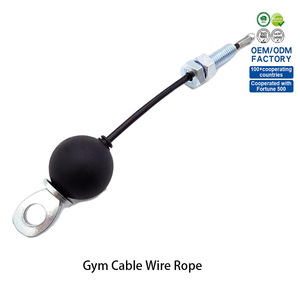
We back distributors with complete 3D DWG floor planning files, replacement component kits (bearings, replacement slats, cables), and dedicated technical support engineers.
6. Frequently Asked Questions (FAQ) for Commercial Procurement
Accelerate Your Facility Fit-Out With Premier China Fitness Manufacturing
Download our complete commercial equipment engineering catalog, full CAD layout files, technical specification sheets, and competitive B2B factory-direct pricing for your next commercial facility project.
Get Catalog