Featured Commercial Fitness Equipment Portfolio
Direct factory manufacturing solutions engineered for high-traffic commercial gyms, athletic centers, and global distribution partners.
Executive Sourcing Guide: Evaluating Chinese Commercial Treadmill Manufacturers
The global commercial fitness equipment landscape has undergone a seismic shift toward advanced manufacturing hubs in China, which currently account for over 70% of worldwide cardio and strength equipment production. For commercial gym operators, franchise developers, hotel chains, and regional equipment distributors, sourcing commercial treadmills from premier Chinese factories offers an unparalleled intersection of cost efficiency, rapid technological adaptation, and structural durability. However, navigating this manufacturing ecosystem requires a rigorous technical evaluation framework that extends far beyond aesthetic casing and superficial features.
Unlike residential treadmills designed for intermittent household use (1–2 hours daily), commercial treadmills installed in high-density facilities must withstand relentless operational stress—enduring up to 16 to 20 hours of continuous operation daily under user weights exceeding 180 kg (400 lbs). Consequently, leading Chinese treadmill exporters have overhauled their manufacturing standards, transitioning from basic assembly lines to automated, robotically welded, high-precision engineering facilities certified under international protocols such as ISO 20957-1, EN 957-6, CE, RoHS, and ETL.
Procurement Insight: High-tier Chinese OEM/ODM factories no longer compete solely on unit cost. The modern benchmark for commercial cardio procurement revolves around Total Cost of Ownership (TCO), mean time between failures (MTBF), motor thermal efficiency, and open-API console compatibility.
Technical Evaluation Framework: Deconstructing Commercial Treadmill Engineering
To establish a resilient supply chain, procurement directors must evaluate manufacturers based on five foundational engineering pillars: drive motor topology, structural frame geometry, running deck impact dissipation systems, belt tribology, and telemetry console electronics.
Drive Motor Topology & Inverter Quality
Commercial treadmills require Heavy-Duty AC (Alternating Current) Induction Motors or cutting-edge PMSM (Permanent Magnet Synchronous Motors). Standard commercial continuous ratings must fall between 3.5 HP and 5.0 HP (with peak ratings of 7.0 HP). Premium factories pair these motors with industrial-grade Variable Frequency Drives (VFDs) from brands like Mitsubishi, Fuji, or specialized proprietary inverters that minimize thermal breakdown and reduce amp draw during high-torque low-speed operations.
Heavy-Gauge Steel Frame Welding
Structural longevity depends on carbon steel tubing specs. Leading exporters utilize Q235/Q355 grade commercial steel with frame wall thicknesses ranging from 3.0 mm to 4.5 mm. Automated robotic TIG/MIG welding eliminates structural micro-fractures. Electrostatic dual-layer powder coating with anti-rust zinc undercoating ensures resistance to aggressive sweat corrosion over years of continuous usage.
Deck Shock Dissipation & Belt Tribology
The interaction between the running deck and belt dictates member comfort and maintenance overhead. High-end factories utilize 25 mm to 32 mm high-density fiberboard (HDF) decks impregnated with phenolic wax for self-lubricating capabilities lasting up to 30,000 km. Combined with multi-point elastomer shock absorption systems (e.g., Variable Durometer Elastomer Cushions), joint impact stress is reduced by 35% compared to outdoor asphalt running.
Technical Benchmarking: Light Commercial vs. Heavy-Duty Club-Grade Treadmills
| Engineering Attribute | Light Commercial (Corporate / Hotel) | Heavy-Duty Club Commercial (24/7 Gyms) | Skelcore / Premium Tier OEM Standard |
|---|---|---|---|
| Motor Drive Rating | 3.0 HP – 4.0 HP AC Continuous | 4.5 HP – 6.0 HP AC Continuous | 5.0 HP AC Continuous / PMSM Synchronous |
| Steel Frame Thickness | 2.5 mm Heavy Gauge Steel | 3.0 mm – 4.0 mm Structural Steel | 3.5 mm – 4.5 mm Heavy Steel + Robotic Weld |
| Running Belt & Deck | 2.0 mm Multi-ply PVC / 20 mm HDF Deck | 3.2 mm Anti-Static Wax Belt / 25 mm Deck | 3.5 mm Diamond Weave Pre-Lubricated / 30 mm HDF |
| Roller Diameter | 60 mm Precision Machined Rollers | 76 mm – 90 mm Steel Crowned Rollers | 90 mm Heavy-Duty Sealed Bearing Rollers |
| Max User Weight | 150 kg (330 lbs) | 180 kg (400 lbs) | 200 kg (440 lbs)+ Constant Load |
| Incline Range | 0% to 15% Motorized Incline | -3% Decline to +18% Incline | -5% Decline to +20% High Torque Incline |
Future Procurement Trends (2025–2030): What Fitness Operators Must Anticipate
The commercial exercise equipment sector is experiencing rapid technological evolution. Commercial buyers sourcing from Chinese manufacturers must align their product roadmaps with key emerging trends that impact operational profitability, energy consumption, and member engagement:
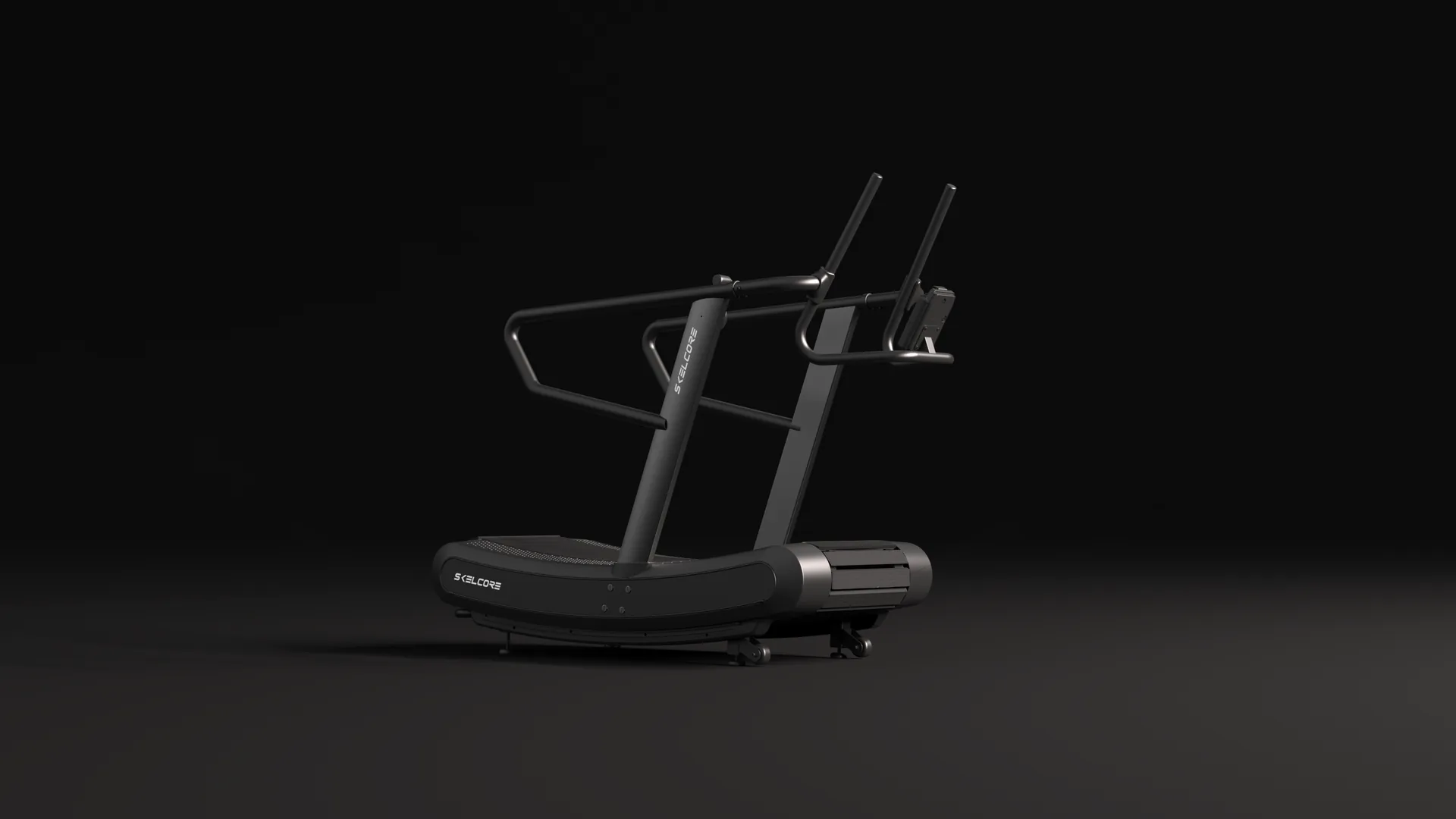
- 1. Energy Efficiency & Self-Powered Motorless Curved Runners: With rising electricity costs globally, non-motorized curved treadmills have expanded from athletic strength facilities into mainstream fitness chains. Powered entirely by kinetic energy generated by the runner's gait, these units eliminate electricity overhead, feature zero motor maintenance, and deliver a 30% higher caloric burn rate due to increased muscular activation in the posterior chain.
- 2. Smart Telemetry & Asset Management Ecosystems: Modern commercial treadmills are no longer standalone cardio units; they are connected IoT endpoints. Top exporters are embedding Android/Linux-based open-API consoles (15.6" to 32" HD Touchscreens) equipped with Wi-Fi 6, Bluetooth 5.2, Apple GymKit, and ANT+ protocols. Operators can monitor facility-wide usage patterns, receive automatic fault codes, and schedule predictive maintenance before belt tears or motor burnout occur.
- 3. Eco-Friendly Sustainable Materials & Recyclability: ESG (Environmental, Social, and Governance) compliance is becoming mandatory for international gym franchises. Leading factories are replacing petroleum-heavy plastics with bio-resins, adopting solvent-free waterbased powder coatings, and engineering modular components designed for 95% metal recyclability at end-of-life.
- 4. Extreme Incline & Dual-Function Cardio Trainers: High-Intensity Interval Training (HIIT) continues to dominate group exercise. Treadmills combining steep incline capabilities (+20% to +30%) with integrated sled-push resistance modes are replacing conventional flat-surface units, offering double the functional utility per square foot of gym floor space.
Enterprise Advantage: Integrated Manufacturing & Global Supply Chain Synergy
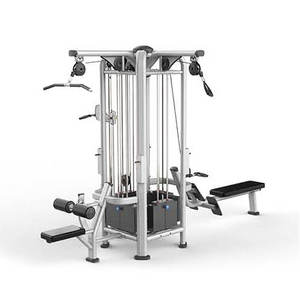
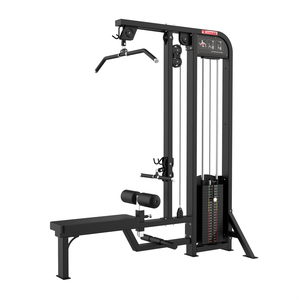
Sourcing commercial treadmills isolated from the rest of your facility's equipment creates aesthetic fragmentation, mismatched warranty terms, and logistical inefficiencies. The optimal procurement strategy leverages integrated manufacturers capable of delivering cohesive fitness ecosystems—spanning cardio, plate-loaded strength, pin-loaded selectorized lines, Pilates reformers, and custom storage racks.
Designed in California. Engineered by Industry Veterans. Headquartered in Miami.
By combining North American biomechanical design standards with China's world-class precision manufacturing infrastructure, our integrated brand approach—backed by Skelcore LLC and Evolution Group USA—delivers commercial fitness solutions installed across more than 60 countries worldwide.
Under the engineering guidance of fitness industry legends like Roy Simonson, every frame geometry, cable travel path, and treadmill deck shock-profile undergoes rigorous prototyping, stress-testing, and workshop validation before mass production.
Comprehensive Quality Control & Containerization Workflow
Purchasing directly from Chinese factories requires foolproof Quality Assurance (QA) protocols to safeguard your capital investment. Reputable OEM exporters enforce a rigid 5-stage quality audit:
- IQC (Incoming Quality Control): Spectrographic testing of raw steel tubing, rubber density checks, and PCB electronic stress analysis.
- IPQC (In-Process Quality Control): Automated robotic weld inspection, alignment validation, and powder coat thickness gauging (minimum 120 microns).
- FQC (Final Quality Control): 48-hour continuous burn-in test for AC motors and VFD inverters under simulated 180 kg dynamic load.
- OQC (Outgoing Quality Control): Drop-testing packaged units in export-grade honeycomb wooden crates to guarantee zero transit damage during ocean freight.
- Container Space Optimization: Custom CAD container loading maps that maximize volumetric efficiency (CBM), fitting up to 32 disassembled commercial treadmills per 40ft HQ container.
Commercial Treadmill Sourcing FAQ
Essential answers for fitness facility owners, procurement managers, and international distributors.
What is the typical Minimum Order Quantity (MOQ) for importing commercial treadmills from China? +
How do Chinese treadmill factories ensure electrical compliance in North America & Europe? +
What warranty coverage is expected when buying commercial treadmills factory-direct? +
What is the operational lifespan of a commercial HDF running deck and belt? +
Can Chinese manufacturers customize treadmill consoles with our gym brand logo and localized UI? +
Ready to Upgrade Your Commercial Floor?
Partner direct with China's leading commercial fitness equipment manufacturer. Get factory pricing, customized OEM design, and global end-to-end logistics support.