Whitepaper: Engineering Standards for CE Certified Fixed EZ Barbells
In the global commercial fitness infrastructure, fixed EZ barbells represent the cornerstone of free-weight isolate training—specifically targeting the biceps brachii, brachialis, and triceps heads while mitigating carpal tunnel strain. For international procurement managers, gym franchise developers, and commercial equipment distributors, sourcing fixed EZ curl barbells is no longer merely a matter of unit price. It requires a deep evaluation of structural metallurgy, elastomer bonding chemistry, dynamic balance balance tolerance, and safety compliance under heavy commercial throughput.
As a leading CE Certified Fixed EZ Barbell Factory & Exporters, our manufacturing framework is built to address the technical vulnerabilities inherent in low-tier free-weight production: head detachment risks, chrome flaking, polyurethane delamination, and excessive mass variance. This technical paper details the engineering specs, manufacturing trends, and compliance requirements governing high-durability fixed EZ barbells.
Dual-Lock Pinning System
Eliminates head spin and structural loosening. Features high-tensile alloy shafts press-fit into solid steel heads, locked with internal heavy-duty retaining pins and full-circumference friction welding.
CPU & German TPU Moldings
Engineered with high-density Cast Polyurethane (CPU) bonded at 180°C. Delivers superior tear strength, zero odor, and non-marking shock absorption that protects facility flooring during high drops.
Biomechanical Cambering
Precision 28mm shaft geometry with optimized 32°/45° dual-plane bends. Reduces wrist shear stress during heavy biceps curl cycles and reverse grip extensions by aligning joint axes naturally.
1. Metallurgy and Structural Integrity: Beyond Standard Steel
The core structural integrity of a commercial fixed EZ barbell depends on the steel grade of its shaft and the joining mechanism securing the weighted heads. Standard retail barbells frequently utilize low-carbon steel (A33 or Q235) with tensile strength below 60,000 PSI, leading to shaft permanent deformation under cyclic loading above 45kg.
Our export-grade fixed EZ barbells utilize cold-rolled 45# carbon steel or 42CrMo alloy steel, heat-treated to achieve a yield strength exceeding 110,000 PSI. The surface micro-structure undergoes precision knurling (medium-pitch diamond pattern at 1.2mm depth) ensuring tactile grip without causing skin abrasion during high-volume commercial sessions.
| Evaluation Parameter | Commercial Grade (Our Factory Standard) | Economy / Retail Grade | Impact on Gym Operations |
|---|---|---|---|
| Head Attachment Tech | Press-Fit + Internal Roll Pin + Friction Weld | Single End-Bolt Threading (Glue bonded) | Prevents head separation risks and catastrophic structural failure. |
| Encapsulated Material | Cast Polyurethane (CPU) / Virgin Rubber | Recycled Rubber Compound / PVC Coating | Zero odor, 5x tear resistance, no surface cracking over 10-year lifespan. |
| Weight Precision | Strict Calibration within ±0.5% (Max 50g) | Uncalibrated Variance ±3% to ±5% | Ensures symmetrical muscular loading and professional athlete compliance. |
| Shaft Surface Coating | Hard Chrome (25+ Microns) / Matte Black Zinc | Decorative Flash Chrome (<5 Microns) | Resists corrosion from sweat, salt air humidity, and heavy chalk usage. |
| CE Compliance | EN ISO 20957-1:2013 & EN ISO 20957-2 Class S | Self-Declared / Non-compliant | Mandatory for European commercial gym facility insurance and safety compliance. |
2. CE Certification & Compliance: What Global Buyers Must Know
Navigating international import regulations demands rigorous compliance documentation. In the European Union and global markets recognizing harmonized standards, commercial fitness equipment falls under the EN ISO 20957 framework. For fixed barbells, compliance with Class S (Studio/Commercial) requires specific testing protocols:
- Static Load Deflection Testing: The barbell shaft must withstand 150% of rated maximum capacity for 30 minutes with a permanent deflection tolerance of less than 0.1%.
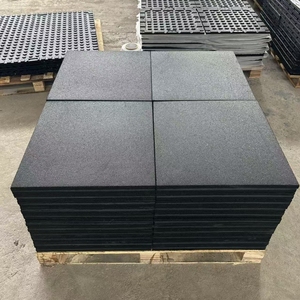
- Drop & Impact Fatigue Testing: Test specimens undergo 20,000 continuous vertical drops from 0.5 meters onto high-density rubber tiles without structural loosening, head cracking, or weld fractures.
- Chemical & Toxicity Compliance (REACH / RoHS): The polyurethane and rubber compounds encapsulated over the steel heads must be certified free of Polycyclic Aromatic Hydrocarbons (PAHs), heavy metals (Pb, Cd, Hg), and volatile organic solvents (VOCs).
3. Global Sourcing & Procurement Trends (2026–2030)
As the commercial gym market evolves toward premium boutique studios, micro-gym franchises, and high-density hotel fitness centers, procurement strategies are shifting dramatically. Key trends transforming B2B purchasing include:
A. Custom Branding & Co-Branded Upholstery/Hardware
Commercial operators no longer accept generic equipment. Modern procurement contracts require custom laser-engraved brand logos, customized color ring accents on barbell ends, and matched pantone polyurethane head covers that mirror facility brand identities across all free weight racks.
B. Freight-Optimized Pre-Assembled vs. Modular Shipping
With global container shipping rates fluctuating, smart buyers are optimizing cube utilization. Fixed EZ barbells are traditionally space-inefficient during sea freight due to fixed shaft lengths. Our factory offers custom palletized nesting racks and modular assembly configurations that maximize 40HQ container load capacity by up to 28% while retaining factory-welded integrity upon final site delivery.
C. Total Cost of Ownership (TCO) vs. Initial Unit Cost
Commercial gym chains evaluate equipment on a 5-to-10-year TCO scale. Low-cost barbells that require replacement every 18 months due to peeling chrome or spinning heads cost 3x more in long-term capital expenditure compared to heavy-duty CPU fixed EZ barbells manufactured to international commercial standards.