Commercial Plate-Loaded Strength Equipment can shape how members train, move, and return to a facility. The right choice is not simply the heaviest machine on the showroom floor. It must fit your members, available space, maintenance capacity, and budget.
The ACSM Worldwide Fitness Trends report tracks strength training as an enduring part of the fitness landscape. Exercise scientist Dr. Brad Schoenfeld has emphasized the importance of progressive resistance for building muscle; the practical takeaway for buyers is to choose equipment that supports safe, measurable progression. That is a research-based summary, not a direct quotation.
A good purchase decision starts with details you can inspect: smooth movement under load, secure plate storage, clear entry and exit, and upholstery that can handle daily use. Ask for warranty terms and service support in writing. Then watch real users test the equipment, including beginners and experienced lifters. Their feedback may challenge your assumptions. These seven tips will help you compare options carefully, spot compromises, and select Commercial Plate-Loaded Strength Equipment that serves your facility beyond the first impression.
Define Your Training Goals and Equipment Requirements
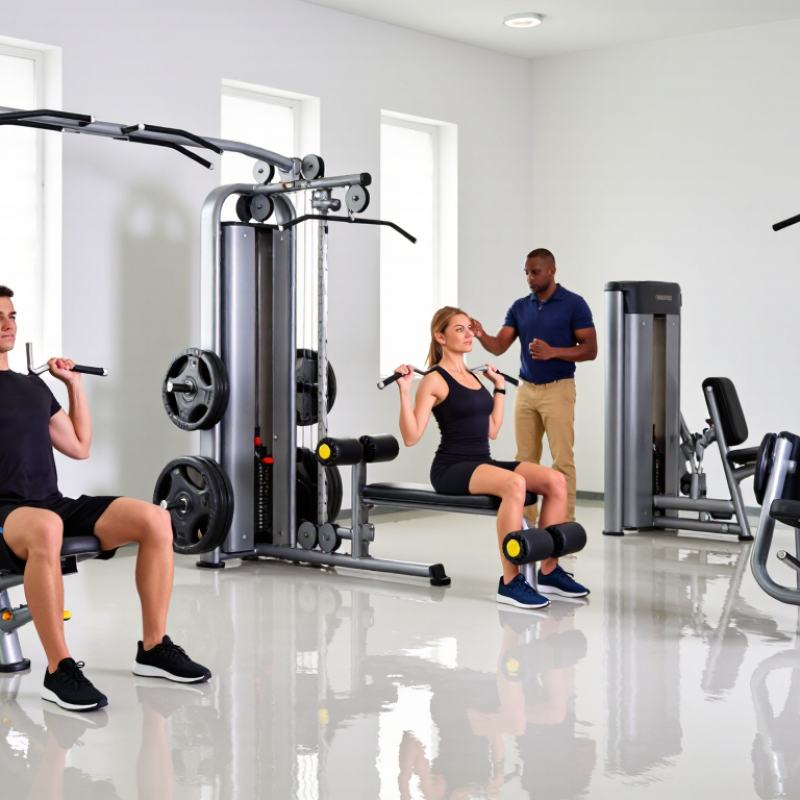
Before comparing commercial plate loaded strength equipment, define who will use it and what they need to train. A small personal-training studio may prioritize adjustable machines for varied movement patterns. A college weight room may need several stations that tolerate repeated group use. List target exercises, user experience levels, peak-hour demand, and available floor space. Measure clearances around each station, not just the machine footprint. Plates need storage, too. Easy to overlook.
The ACSM 2025 Worldwide Fitness Trends survey ranked traditional strength training fifth among its predicted trends. That finding signals continuing interest, but it does not tell you which machines your members will use. Review your own attendance records and ask members which exercises they cannot access during busy periods. Then map those needs to equipment: a chest press, row, leg press, or hip-focused station may address specific gaps. Include loading range and plate compatibility in your requirements. If beginners share the room with experienced lifters, clear adjustment points and stable entry positions matter. I would also leave some space unassigned at first; demand can be less predictable than a spreadsheet suggests. The ACSM survey is a trend indicator, not a substitute for local usage data.
| Tip | Training Goal | Recommended Equipment Type | Key Equipment Requirements | Typical Resistance Range | Space and Layout Considerations | Evaluation Checklist |
|---|---|---|---|---|---|---|
| 1 | Build overall lower-body strength | Plate-loaded power squat, hack squat, or leg press | Look for a stable frame, non-slip footplate, adjustable shoulder or back supports, smooth starting resistance, and clearly defined safety stops. | Approximately 100–600 kg of plates, depending on the machine and user group | Allow room for the machine, plate storage, and safe entry and exit. Keep walkways clear around moving arms and footplates. | Check frame stability, range-of-motion limits, safety catches, upholstery durability, and whether users can adjust the machine without assistance. |
| 2 | Develop chest, shoulder, and pressing strength | Plate-loaded chest press, incline press, or shoulder press | Choose independent or converging press arms when possible, adjustable seats, comfortable handles, positive-lock adjustment points, and a controlled return path. | Approximately 50–300 kg of plates, depending on the lever design and target users | Provide adequate clearance in front of the handles and behind the seat. Position the unit where users can load plates safely. | Test seat adjustment, handle reach, pressing alignment, starting position, stability under uneven loading, and ease of unloading. |
| 3 | Train the back and upper-body pulling muscles | Plate-loaded row, high row, or pulldown-style lever machine | Prioritize chest support where appropriate, adjustable thigh or foot bracing, neutral and overhand grip options, and a smooth resistance curve. | Approximately 50–300 kg of plates, depending on the lever ratio and machine geometry | Leave sufficient clearance for the handles and moving levers. Place plate storage close enough to reduce unnecessary carrying. | Confirm that the chest pad and seat support different user heights, the handles remain secure, and the machine does not rock during heavy rows. |
| 4 | Support progressive overload for mixed users | Multi-joint plate-loaded machines with independent loading arms | Select equipment with small incremental loading options, balanced lever arms, clearly marked adjustment positions, and sufficient capacity for advanced users. | Use load increments of 1.25–25 kg plates to support gradual progression | Plan a dedicated loading zone so users can change plates without blocking adjacent equipment or emergency routes. | Assess whether beginners can start with minimal resistance, whether advanced users can add enough load, and whether both sides can be loaded evenly. |
| 5 | Improve gym flow and training efficiency | High-demand machines such as leg press, chest press, row, and shoulder press | Choose equipment with quick adjustments, accessible plate horns, intuitive user instructions, and durable components designed for frequent daily use. | Capacity should match expected membership level and peak-hour demand | Use traffic patterns to separate heavy lower-body equipment from quieter training areas. Maintain approximately 90–120 cm of usable circulation space where practical. | Observe how long it takes to adjust, load, unload, and reset the machine. Confirm that multiple users can move around it safely. |
| 6 | Control operating costs and maintenance needs | Commercial-grade plate-loaded machines with simple mechanical systems | Inspect weld quality, pivot bearings, bushings, fasteners, upholstery, protective coatings, and the availability of replacement wear parts. | Plate-loaded systems generally avoid selectorized weight-stack replacement costs | Allow access around pivot points and fasteners for inspections. Keep plates stored off the floor to reduce damage and trip hazards. | Ask for maintenance intervals, cleaning guidance, spare-part lead times, warranty coverage, and the expected service life of high-wear components. |
| 7 | Protect users and meet facility safety expectations | Any commercial plate-loaded unit with documented safety features | Require stable bases, guarded pinch points, secure plate horns, robust handles, emergency stops or safety catches where applicable, and visible usage instructions. | Load limits must be clearly stated and suitable for the intended user population | Install equipment on a level, non-slip surface with adequate overhead clearance and unobstructed access to exits and fire-safety equipment. | Review structural load ratings, user weight limits, safety labels, inspection procedures, accessibility, and compatibility with local facility regulations. |
FAQS
Start with member needs, target exercises, experience levels, peak-hour demand, and available floor space. Attendance records can reveal busy-hour gaps. Leave some room unassigned; spreadsheets can be wrong.
Measure the machine, user movement, plate loading, and walking paths. Check ceiling obstructions such as low ductwork. Mark the footprint with tape. Measure twice.
Confirm that the machine accepts the facility’s plates and offers a suitable loading range. Consider both beginners and experienced lifters. Check these details before delivery.
Try seat height, back-pad angles, and lever positions with shorter and taller users. Settings should feel stable and easy to repeat. A wide adjustment range alone proves little.
Check locking pins, plate storage, non-slip platforms, and guarded moving parts. Test the starting position without plates, then add a small load. Listen for rattling or uneven movement. Small weaknesses matter.
Ask different users to test entry, reach, and transfers. Handles should not require awkward stretching, and seat edges should leave transfer space. My earlier checklist missed this. Real feedback can change a decision.
Ask how often hinges, cables, bearings, and adjustment points need inspection. Request written coverage for the frame, moving parts, labor, and shipping. Check exclusions, response times, and local service availability.
Include plates, flooring, delivery, installation, taxes, cleaning supplies, and repairs. Compare realistic costs over five years. The purchase price is only one line.
Check plate storage and keep walking paths clear. Loose plates can block access routes. I underestimated storage once; it was avoidable.
Conclusion
Choosing Commercial Plate-Loaded Strength Equipment requires more than comparing prices or appearances. Start by defining your training goals, target users, and the exercises your facility needs to support. Examine each machine’s frame construction, materials, weld quality, stability, and weight capacity to ensure it can handle frequent commercial use. Compare plate-loaded machines and attachments based on movement variety, space efficiency, and whether they support progressive training for different experience levels.
Also review adjustability, safety features, and accessibility so users can set up equipment comfortably and train with proper positioning. Consider the available floor space, storage for weight plates, cleaning and maintenance requirements, warranty coverage, and the total cost of ownership. A reliable purchasing decision should balance durability, versatility, user safety, and long-term value rather than focusing only on the initial investment. By evaluating these factors together, facility owners can create a practical, efficient, and dependable strength-training environment.