0%

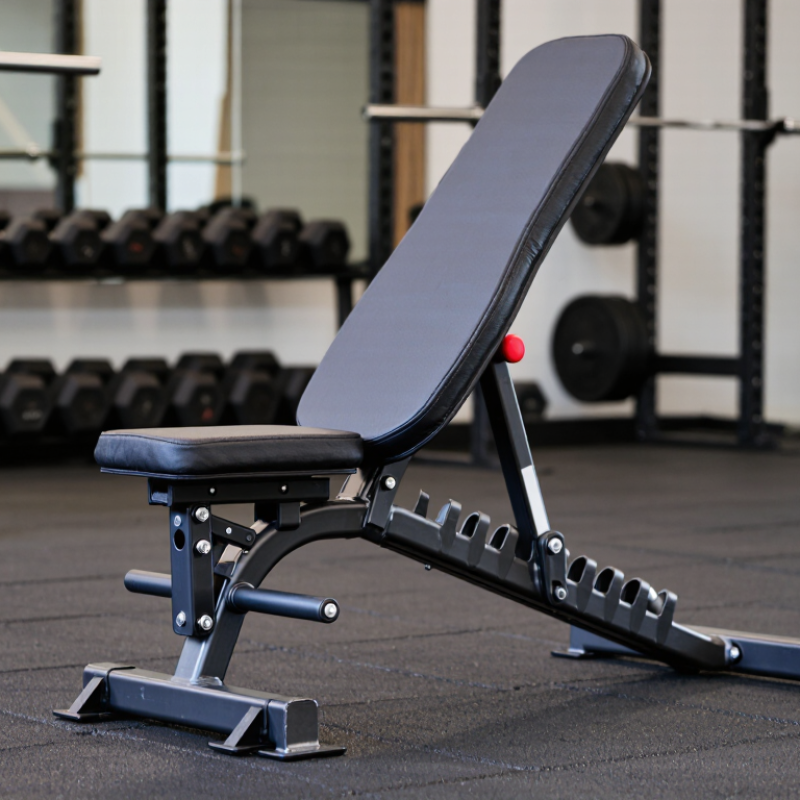
A Heavy-Duty Commercial Adjustable Bench is built for demanding strength-training environments. It supports repeated use in gyms, studios, schools, and performance facilities. Unlike a basic home bench, it usually combines a reinforced steel frame, thicker upholstery, stable feet, and several backrest positions. These details matter when athletes press heavy dumbbells, perform incline movements, or adjust quickly between sets.

The label is not magic. A bench becomes genuinely commercial through construction, testing, serviceability, and safe daily performance. Buyers should examine its weight capacity, adjustment mechanism, pad thickness, gap design, frame welds, and warranty terms. A wide base can reduce movement on rubber flooring. A firm pad can improve pressing control. However, excessive firmness may feel uncomfortable during longer sessions. That trade-off deserves attention.

Dr. Stuart McGill, a respected spine biomechanics researcher, states, “The spine is not a hinge.” His warning applies when users choose and adjust training equipment. A Heavy-Duty Commercial Adjustable Bench should support controlled positioning, not encourage careless loading. The backrest must lock securely. The seat angle should remain stable under pressure. Handles and wheels can improve movement between training zones, but they should not weaken the frame.

Real-world inspection is still necessary. Specifications cannot show every problem. A good facility manager checks bolts, pins, upholstery, and frame movement regularly. Some benches look powerful but wobble during use. That is disappointing, and it happens. This guide explains what separates reliable commercial equipment from oversized consumer products, while recognizing that no bench suits every athlete or facility.
What Is a Heavy Duty Commercial Adjustable Bench?

Definition and Commercial Role: Benches Rated for 1,000+ lb Training Loads

A heavy-duty commercial adjustable bench is built for repeated training, not occasional home use. Its back and seat positions support pressing, rowing, and incline work. A 1,000-plus-pound rating usually refers to total capacity: the athlete, barbell, dumbbells, and uneven movement combined. That detail matters. A 300-pound athlete using 700 pounds creates a different demand than a lighter user lifting the same load.

The commercial role is substantial. The Health & Fitness Association’s 2024 Global Report recorded about 184 million fitness-facility members worldwide in 2023. High-traffic rooms therefore need equipment that tolerates frequent setup, drops, adjustments, and cleaning. Commercial benches should use stable frames, secure adjustment ladders, firm upholstery, and feet that resist floor movement. ASTM F2276 provides guidance for fitness-equipment design and safety, but it does not automatically certify every bench for a 1,000-pound load.

Capacity labels still need careful reading. Testing conditions can differ from real training. A bench may survive a static load yet feel unstable during heavy pressing. I would inspect welds, pad gaps, locking points, and the manufacturer’s test method before purchase. Small details matter. Ratings are useful, not magical. Even strong equipment requires scheduled inspection, because loose hardware and worn upholstery can change the user’s position under load.

Frame Construction: 11-Gauge Steel, 2×3-Inch Tubing, and Welded Joints

What Is a Heavy Duty Commercial Adjustable Bench?

A heavy duty commercial adjustable bench begins with its frame. The foundation matters. For demanding facilities, 11-gauge steel offers substantial wall thickness and dependable resistance to repeated loading. The exact measurement can vary by steel standard, so published specifications deserve careful checking.

A 2×3-inch rectangular tube creates a broad, stable base beneath the pad. Its shape helps control twisting during presses, rows, and seated exercises. I have found that a rigid frame often feels more important than extra padding. A bench should not rock when a user changes position. Small movement becomes distracting under heavy, repeated use.

Welded joints connect the frame sections and transfer force through the structure. Clean, continuous welds usually indicate better manufacturing control, but appearance alone proves little. Inspect the joint edges, weld consistency, and areas around adjustment points. Uneven beads or visible gaps deserve questions. I once paid more attention to steel thickness than weld quality, and that was a mistake. A strong tube can still perform poorly if its connections are weak. The adjustment ladder should also align accurately, without excessive play. It should lock firmly. Regular inspections remain necessary, especially where users frequently reposition the back pad. Even commercial-grade construction needs maintenance.

Adjustment Mechanisms: 7–12 Backrest Positions Across 0°–85°

What Is a Heavy Duty Commercial Adjustable Bench?

A heavy duty commercial adjustable bench is built for repeated training, frequent angle changes, and demanding gym use. Its adjustment system matters as much as its steel frame. Most commercial designs offer seven to twelve backrest positions, ranging from 0° flat to approximately 85° upright. This range supports bench presses, incline presses, seated shoulder work, rows, and core exercises.

Small angle changes matter.

A 0° position keeps the torso horizontal for pressing stability. Around 30°–45°, the bench shifts emphasis toward the upper chest. Near 70°–85°, it supports seated pressing with a more vertical posture. The exact angle is often estimated by the user, not measured with a digital gauge. That creates a practical weakness. Two benches marked “45°” may feel different during training.

Adjustment mechanisms usually include a steel ladder, locking pin, or indexed support system. A reliable mechanism should engage fully, resist side movement, and remain easy to operate under load. ASTM F2276 addresses safety considerations for fitness equipment, while EN 20957 provides broader guidance for stationary training equipment. These standards do not define one ideal position count. Therefore, more settings do not automatically mean better performance.

The Health & Fitness Association reported 72.9 million U.S. fitness-facility users in 2023. That growth increases demand for equipment that survives repeated daily adjustments. In a busy facility, a fast mechanism helps. Still, speed should never replace secure locking. This is where design judgment matters. A twelve-position bench may offer flexibility, but a simpler seven-position system can feel stronger, clearer, and easier to maintain.

Safety Design: ASTM Testing, 12-Inch Pads, and Wide Stabilizing Footprints

A heavy-duty commercial adjustable bench should be judged by tested safety, not steel thickness alone. ASTM F2276 addresses fitness-equipment concerns such as stability, structural integrity, and user contact hazards. However, ASTM testing does not automatically prove that every bench is safe for every facility. Buyers should request the test method, applied load, laboratory details, and inspection date. That distinction matters.

A 12-inch pad can support the torso more consistently during pressing and incline movements. It may also reduce shoulder drift when users adjust positions quickly. Still, pad width is not a substitute for firm upholstery, controlled adjustment points, or secure locking hardware. In practice, technicians should check for frame deflection, loose pivots, exposed gaps, and damaged stitching. Small flaws become louder under repeated commercial use.

A wide stabilizing footprint helps resist rocking during heavy lifts, especially when users mount the bench from one side. Yet a broad base can still wobble on an uneven floor. HFA’s 2024 U.S. Health & Fitness Consumer Report recorded 72.9 million fitness-facility members in 2023, showing how frequently shared equipment may be used. That volume makes repeatable inspections important. ASTM-based evaluation offers a useful framework, but real gym behavior remains less predictable than laboratory loading. A careful design can still miss rushed adjustments, misplaced plates, or poor floor contact.

What Is a Heavy Duty Commercial Adjustable Bench? - Safety Design: ASTM Testing, 12-Inch Pads, and Wide Stabilizing Footprints

Safety or Design Dimension Typical Commercial Design Data Why It Matters Verification Method
Applicable safety framework ASTM F2276 may be used as a reference for fitness-equipment safety requirements and test methods. The applicable edition and product scope should be confirmed before testing. Provides a structured basis for evaluating stability, strength, moving parts, pinch points, labeling, and user safety. Documented laboratory or engineering tests against the specified ASTM edition, supported by inspection records.
Pad width Approximately 12 in (30.5 cm) across the main support pad is a common commercial design target. Offers a broad upper-back and shoulder contact area while allowing normal arm movement during pressing exercises. Measure the usable upholstered width at the narrowest section; exclude side handles, seams, and frame flanges.
Back-pad adjustment Common configurations provide multiple positions from flat to an incline of roughly 70°–85°, depending on the mechanism. Supports flat, incline, and shoulder-focused exercises while allowing users to select a suitable torso angle. Check every locking position for complete engagement, excessive play, and unintended movement under load.
Seat-pad adjustment Typically includes 2–4 seat-angle settings, often from level to approximately 20°–30°. Helps reduce sliding and improves hip positioning during incline pressing and seated strength movements. Apply load in each position and confirm that the adjustment support remains fully seated without slipping.
Stabilizing footprint A wide base commonly measures about 24–30 in (61–76 cm) across, with long front-to-back support rails. A larger contact area lowers the risk of rocking or tipping during uneven loading and dynamic movements. Place the bench on a level surface and check rocking, lift-off, and lateral movement under representative loading.
Frame and joint construction Commercial benches generally use welded steel frames with reinforced adjustment brackets, pivot tubes, and replaceable wear components. Reinforced joints help distribute repeated loads and reduce deformation at high-stress connection points. Inspect welds, fasteners, pivots, bushings, and adjustment holes for cracks, looseness, distortion, and excessive wear.
Load rating communication The stated maximum should clearly define whether it includes the user, external weight, or both; no universal rating applies to every bench. Clear definitions prevent users from comparing incomplete ratings or exceeding the intended combined load. Verify the rating against the manufacturer’s technical documentation and controlled static or fatigue testing.
Upholstery and edge profile High-density foam with durable, cleanable upholstery and rounded or chamfered edges is preferred for frequent facility use. Improves comfort, reduces pressure points, and helps limit cuts or snagging at exposed pad edges. Check seams, attachment points, surface cracking, foam compression, exposed staples, and edge sharpness.
Floor contact and leveling Non-marking rubber feet or end caps should provide continuous contact and accommodate minor floor irregularities. Improves grip, reduces noise, protects flooring, and helps keep the bench stable during repeated use. Confirm that all feet contact the floor, remain secure, and show no flattening, tearing, or excessive movement.
Maintenance and inspection interval Visual inspection before use is recommended, with scheduled tightening and a documented periodic inspection based on facility usage. Routine checks identify loose hardware, damaged upholstery, worn pivots, and unstable feet before they become hazards. Use a written checklist and remove the bench from service immediately if structural damage or unreliable locking is found.

Note: Dimensions and adjustment ranges shown are typical design references, not universal requirements. Actual safety performance depends on the specific product, loading instructions, installation surface, inspection program, and applicable standards.

Commercial Selection: Weight Capacity, Daily-Use Ratings, Warranty, and Maintenance

What Is a Heavy Duty Commercial Adjustable Bench?

A heavy duty commercial adjustable bench supports repeated training in gyms, studios, and shared facilities. Its value depends on more than a large weight-capacity number. Check whether the rating includes the user, added weights, and movement forces. A 500-pound rating may not mean 500 pounds on the bar. Ask for static and dynamic testing details. A stable frame, wide feet, and secure adjustment ladder reduce movement during presses. Small gaps between settings can also improve comfort and training control. In real facilities, benches often receive rough handling, not careful home use.

Tips: Choose a bench with a clearly stated daily-use rating. Inspect welds, hinge points, pads, and transport handles before purchase. A written warranty should identify coverage periods, replacement parts, labor, and upholstery exclusions. Vague language creates problems later. Keep the invoice and inspection records.

Maintenance should be simple enough for busy staff. Tighten bolts regularly, especially near the back pad and front support. Clean sweat from vinyl after every busy session. Check adjustment pins for smooth engagement and visible wear. Replace damaged upholstery before foam becomes exposed. Leveling feet may need adjustment on uneven floors. Do not assume a heavy frame cannot loosen. It can. A practical inspection log helps, although many facilities skip it during peak hours. That is a weakness worth acknowledging, because reliability comes from consistent care, not only from robust construction.

FAQS

What does a 1,000-plus-pound bench rating usually include?

It usually includes the user, weights, and movement together. A 300-pound athlete and 700-pound load already reach 1,000 pounds.

Is a 1,000-pound rating enough for commercial training?

It can be useful, but the number is not everything. Static testing may not reflect movement during heavy pressing.

What frame features support repeated commercial use?

Look for 11-gauge steel, 2×3-inch tubing, stable feet, and accurately aligned adjustment parts. The bench should not rock.

Why do welded joints matter on an adjustable bench?

Welds transfer force through the frame. Inspect bead consistency, joint edges, and areas near adjustment points.

How should the back pad adjustment system work?

The ladder should align cleanly and lock firmly. Excessive play can shift the user during pressing.

Does thicker steel guarantee a stronger bench?

No. Strong tubing can perform poorly when welds or locking points are weak. I once focused too much on steel thickness.

What details should buyers inspect before purchasing?

Check welds, pad gaps, upholstery firmness, feet, locking points, and the published testing method. Small gaps can matter.

Why are regular inspections necessary?

Loose hardware and worn upholstery can change body position under load. Inspect high-use adjustment areas and tighten parts when needed.

Can a heavy-duty bench remain stable on every floor?

Not always. Stable feet help resist movement, but uneven flooring can still affect pressing stability. That detail is easy to overlook.

What should a commercial facility expect from this type of bench?

It should tolerate frequent adjustments, cleaning, and repeated training. Even durable equipment needs maintenance and honest capacity checking.

Conclusion

Heavy-Duty Commercial Adjustable Benches are designed for demanding gym environments where equipment must withstand frequent use and substantial training loads. Typically rated for 1,000 pounds or more, these benches use durable 11-gauge steel, 2×3-inch tubing, and fully welded joints to provide a stable, long-lasting frame. Their adjustable backrests commonly offer 7–12 positions, ranging from a flat 0° setting to an incline of approximately 85°, supporting presses, rows, and other strength-training movements.

Safety and usability are equally important in commercial settings. Quality benches may include ASTM-based testing, thick 12-inch pads for comfort and support, and wide stabilizing footprints to reduce movement during exercise. When selecting a bench, facility managers should evaluate its weight capacity, daily-use rating, warranty coverage, and maintenance requirements. A well-designed model should remain reliable under repeated use while offering secure adjustments, easy cleaning, and straightforward long-term upkeep.

Evelyn

Evelyn

Evelyn is a professional marketing specialist with a strong understanding of the company’s products, their practical applications, and the needs of the customers they serve. She regularly contributes expert articles to the company website, sharing clear, useful insights that help readers make......