Choosing Olympic Flat Bench Press Stations is not just a matter of comparing prices or counting steel tubes. The right station should fit your lifters, available floor space, and training routine. Dan John, a strength coach and author, offers a useful reminder: “The goal is to keep the goal the goal.” For bench selection, that means prioritizing stable, repeatable training over features you may rarely use.
Start with the frame. Check the listed weight capacity, welds, base width, and how firmly the station sits on the floor. Look at the uprights, too: Are the bar catches easy to reach, and do they offer useful height adjustments? A bar that feels awkward to unrack can spoil a session before the first repetition. Small details matter.
Fit matters. Measure the room, including space for loading plates and moving around the bench. Compare the bench height and pad width with the people who will use it. If possible, test the station with a controlled lift; watch for rocking, sharp edges, or a pad that shifts under pressure. Quiet and solid.
This guide explains how to compare frame construction, capacity, adjustment options, footprint, and maintenance needs. It also flags a common trade-off: a heavier station may feel more planted, yet be harder to reposition. Specifications help, but they cannot replace careful inspection. And no single model is best for every gym. A thoughtful choice balances reliable support, practical fit, and the realities of daily use.
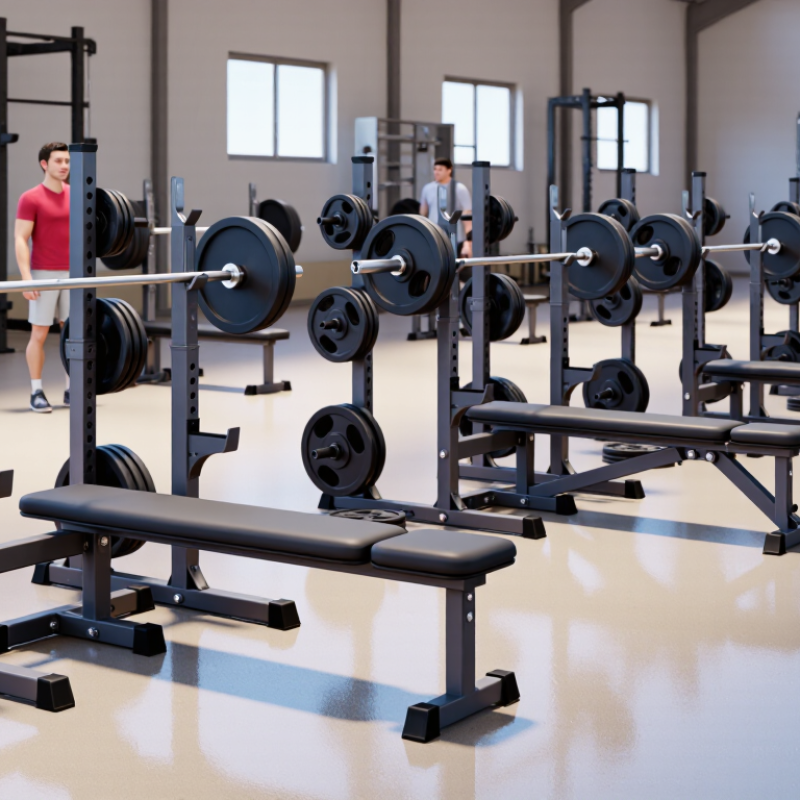
Before choosing an Olympic flat bench press station, define who will use it and how often. A home lifter training three times weekly has different needs from a busy strength room. Write down the main exercises, typical working loads, and available floor space. Heavy bench pressing calls for a stable frame and correctly positioned safety supports. Solo training makes those supports especially important. They should catch the bar without restricting a normal press.
Check the station’s fit with your bar and plates, then consider the lifter’s size and setup. Rack spacing, bar clearance, and bench width affect comfort and repeatable positioning. Measure the room, including space for loading plates and moving around the station. It is easy to overbuy. A larger unit may look reassuring but can crowd the training area. I would also question whether fixed uprights suit every user; they may not. A station designed for one person can feel awkward for another.
Tips: Test the unracked bar position before buying, if possible. Confirm the safety supports can be set for the lifter’s arm length. Note the floor surface and ceiling height, too. Keep a little space beside the bench for plate changes. A quick measurement can prevent a frustrating fit.
A flat bench station is more than a padded board between two uprights. Its frame carries the load, while the feet resist movement during unracking. Check welds, bolts, and floor contact. Small defects matter. The pad should feel firm, stay level, and provide enough width for stable shoulder positioning without restricting arm movement. Look closely at the upholstery seams; loose edges can wear quickly under repeated use. Uprights should allow clear, repeatable bar placement, and their spacing must suit the bar you actually train with.
J-hooks hold the bar, while safety arms or catches help limit its drop if a lift stalls. Set the catches just below your normal bar path, then test their height with an unloaded bar. The International Weightlifting Federation’s Technical and Competition Rules specify 20-kilogram and 15-kilogram competition bars. Those figures describe weightlifting bars, not every bench-press bar, so verify sleeve length and rack fit rather than assuming “Olympic” guarantees compatibility. Check the station’s stated load capacity, too, including the bar and plates. One detail is easy to overlook: a solid frame can still feel awkward if the hooks sit too high for your reach. Try the setup in person when possible.
| Component | What It Does | Useful Selection Criteria | Typical Details to Check |
|---|---|---|---|
| Bench frame and base | Supports the lifter and transfers the load to the floor. | Look for a rigid frame, stable feet, sound welds, and a stated maximum load that covers the intended user and barbell load. | Check the manufacturer’s total-load rating, frame material and finish, floor contact points, and whether the station rocks on a level floor. |
| Bench pad | Supports the upper back and torso during the lift. | Choose a firm, securely attached pad with a durable, easy-to-clean cover and enough width for comfortable shoulder support. | Pad dimensions vary by model; compare the listed length, width, thickness, and upholstery. A common pad width is approximately 25–30 cm. |
| Uprights and bar catches | Hold the bar at the start and end of a set. | Check that the catch height can be set for the user and that the bar sits securely without being difficult to unrack. | Look for clearly defined adjustment positions, secure locking pins, and protective contact surfaces where the bar rests. |
| Safety arms or spotter catches | Provide a backup point to catch the bar if a repetition cannot be completed. | Prefer adjustable safeties that can be positioned just below the bar’s normal range of motion for the lifter. | Confirm the safeties are included, lock securely, and have a load rating suitable for the station. They do not replace a trained spotter. |
| Olympic bar compatibility | Allows the station to be used with an Olympic-style barbell. | Check that the uprights provide enough clearance for the bar and that the bar can be loaded and removed without obstruction. | Olympic bar sleeves are nominally 50 mm in diameter; confirm the bar length and sleeve design suit the station and available space. |
| Weight plate storage | Stores plates when they are not on the bar and can help keep the training area organized. | Consider the number and position of storage pegs, as well as the station’s stated storage capacity. | For Olympic plates, check that storage pegs are compatible with nominal 50 mm plate openings. Storage pegs are not lifting points. |
| Footprint and access | Determines how much floor space the station uses and how easily users can move around it. | Measure the station in use, including room for plate loading, a spotter, and safe movement around the bench. | Published dimensions differ by design. Compare overall length, width, height, and any clearance needed for the bar and plates. |
| Assembly and maintenance | Affects setup, long-term stability, and ease of inspection. | Choose a station with clear assembly instructions and accessible fasteners that can be checked periodically. | Inspect bolts, welds, catches, upholstery, and safety components regularly; follow the maker’s assembly and maintenance guidance. |
Selection note: Dimensions and load ratings are model-specific, not universal standards. Verify the station’s specifications and assemble it according to its instructions before use.
An Olympic flat bench should feel planted before it feels comfortable. Check for a wide footprint, rigid welds, and cross-bracing that resists side-to-side movement. On a level floor, press firmly on each corner; rocking or frame flex deserves attention. Inspect the rack hooks and safety arms, too. They should lock securely and sit at matching heights. The WHO’s 2020 physical activity guidelines recommend muscle-strengthening activity at least two days per week, so a station may face repeated use. Still, frequency alone does not tell you how sturdy a bench is.
Safety depends on fit and setup. Confirm that the bench height lets your feet rest flat and your shoulder blades stay supported. Set safety arms just below the bar’s lowest position when your back is arched. Check the rated capacity carefully: some figures refer to the lifter, while others include the bar and plates. For example, a 100 kg lifter with 120 kg loaded on the bar may place about 220 kg on the station. Choose a rating that covers the intended total load, with a sensible margin. A published rating is not a promise that every floor or setup is safe.
Tips: Bring a tape measure. Check the bench-to-rack spacing, hook positions, and safety-arm adjustment before buying. Ask for the capacity definition in writing. I’d also recheck bolts after assembly; it is easy to assume they are tight when they are not.
Before choosing an Olympic flat bench press station, confirm it fits your barbell. “Olympic” usually refers to sleeves around 50 millimeters wide, but the bar’s full length also matters. Measure the distance between the inner collars and compare it with the rack’s support width. A bar that technically fits may leave too little room to grip comfortably. Small detail. It matters.
Check the J-hooks and safety catches next. They should adjust to positions that let you unrack the bar without shrugging or reaching. If the station has spotter arms, confirm they sit level and lock firmly into the uprights. Review the stated weight capacity, and ask whether it covers the bar and plates together. Do not assume every attachment shares the same rating.
Look closely at the hole spacing, frame stability, and floor footprint. Closely spaced adjustment holes make it easier to set the bar at a suitable height. A wide base can feel steadier, but it may not fit a crowded training area. I have found that feature lists can sound impressive; actual adjustment range is easier to judge from measurements. Check those figures against your bar, lifting space, and usual setup.
Choose a station that fits the room in use, not just the floor plan. Measure its footprint with the bar loaded and both side-access paths clear. Include space for a spotter, plate storage, and users moving around the bench. Measure twice. The 2023 IHRSA Global Report estimated 184 million health-club members worldwide in 2022. That figure signals a large shared-equipment market, but it does not mean every facility needs the heaviest model. Match capacity to expected traffic.
For durability, inspect welds, frame movement, adjustment pins, and upholstery seams. Ask for the stated load rating, warranty exclusions, and replacement-part availability in writing. A thick-looking frame is not proof of long service life. Not always. Compare the delivered cost, including freight, installation, floor protection, and future pad replacement. A lower purchase price can lose its appeal if repairs interrupt training. Conversely, paying extra for features rarely used may not be sensible. I would leave a little budget for maintenance; that cost is easy to overlook when comparing quotes. The IHRSA report provides industry context, not a bench-specific lifespan or cost benchmark, so verify those details with the supplier.
Compare footprint, rated load capacity, and estimated purchase budget across three typical station categories.
Compact stations can suit limited spaces, while commercial-style stations generally offer higher stated load capacities at a higher cost. Figures are illustrative planning benchmarks, not universal specifications; check the dimensions, load rating, and current price of each model before purchasing.
Check welds, bolts, floor contact, and cross-bracing. Press each corner on a level floor. Rocking is a warning.
It should feel firm and level, with enough width for your shoulders. Check the upholstery seams for loose edges. They can wear.
Place them just below your lowest bar path, including your usual back arch. Test their height with an unloaded bar. Small detail.
Measure the distance between the bar’s inner collars and compare it with the rack’s support width. Also check sleeve length and gripping room.
Ask whether it includes the lifter, bar, and plates. A 100 kg lifter with 120 kg on the bar puts about 220 kg on the station. Choose a rating with a sensible margin.
J-hooks should let you lift the bar without shrugging or reaching. Matching hook heights and useful adjustment positions matter. It matters.
Closer spacing can help fine-tune bar height, but check the actual adjustment range. A wide footprint may not suit a crowded room.
Recheck the bolts, confirm the catches lock, and test the station before loading it. I might still miss a loose fastener, so a second check is worthwhile.
Choosing Olympic Flat Bench Press Stations starts with identifying who will use the equipment, how often it will be used, and the type of training it must support. Consider the bench, rack, bar supports, and safety features as parts of one complete station. A well-designed setup should feel stable during use, provide suitable weight capacity, and allow lifters to position the bar securely.
Before purchasing, check that the rack fits the Olympic barbell you plan to use and that its height and safety supports suit your needs. Compare each station’s footprint with the available workout space, then assess the materials, construction, and expected durability. Finally, weigh these factors against your budget to find a station that offers the right balance of safety, functionality, and long-term value.