Pin-Loaded Selectorized Gym Machines remain a practical choice for commercial gyms, hotel fitness rooms, and home training spaces. They offer guided movement, quick weight changes, and clear exercise options. A member can move the selector pin, adjust the seat, and begin without loading plates. Simple, but not effortless to choose well.
This guide compares ten leading machines associated with China’s fitness-equipment market. It looks beyond polished photos. Frame stability, cable travel, upholstery, adjustment range, and service access all matter during daily use. A smooth first repetition is useful; consistent performance after thousands of repetitions matters more. Product specifications can also vary between models and production runs, so buyers should verify details directly with manufacturers.
Fitness-equipment consultant Daniel Wu captures a useful selection principle: “A machine earns its place through dependable movement, clear adjustments, and serviceable parts—not appearance alone.” That is the lens for this list. The comparison considers how each machine may suit different users, training goals, and facility sizes. It also recognizes a limitation: published specifications cannot fully reveal noise, feel, or long-term wear. Those details deserve hands-on testing when possible. Small differences count. A poorly placed adjustment handle or a seat that shifts under load can frustrate users quickly. The rankings are a starting point, not a substitute for inspecting the machine, checking warranty terms, and confirming local support before purchase.
Define Pin-Loaded Selectorized Equipment Using ASTM F2216-17(2022)
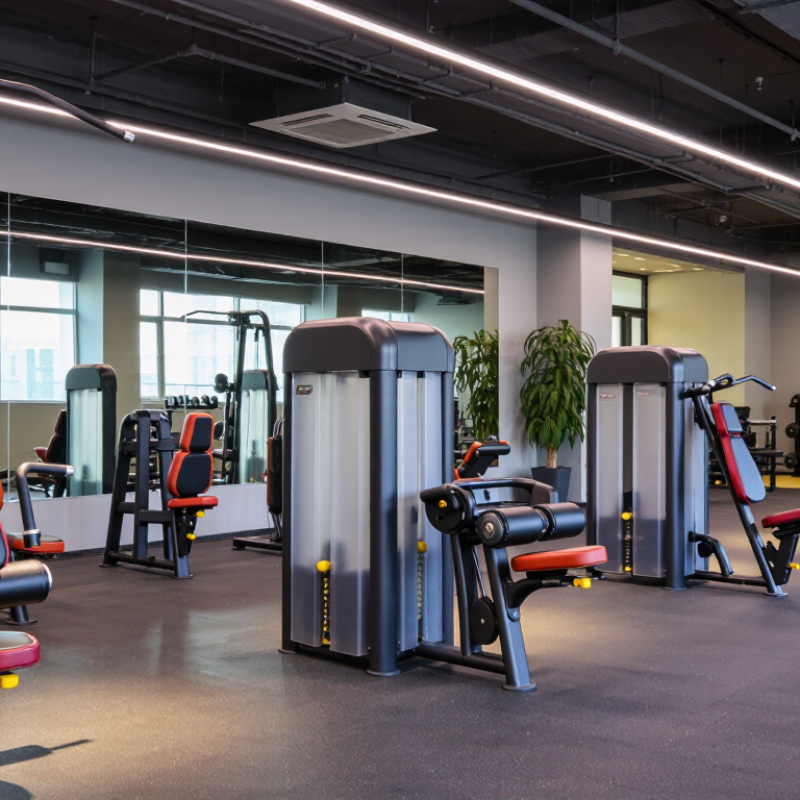
Pin-loaded selectorized equipment uses a weight stack, selector pin, and guided resistance path. Under ASTM F2216-17(2022), selectorized strength equipment should be assessed as a complete user-operated system. Its frame, moving parts, adjustment points, stops, guards, and instructional information all matter. The standard does not simply approve a machine because its steel looks heavy. That distinction is often missed.
For a “Top 10” gym list, practical categories include chest press, shoulder press, lat pulldown, seated row, leg press, leg extension, leg curl, abdominal crunch, biceps curl, and triceps extension. Each machine should allow clear pin selection and controlled movement. The selector pin needs secure engagement. The weight stack should move without unexpected contact. Finger gaps, cable routing, seat adjustment, and end-of-range control require close inspection.
Useful evidence supports careful equipment selection. The Health & Fitness Association’s 2024 Global Report recorded about 184 million fitness-facility members worldwide in 2023. That scale increases the importance of repeatable maintenance and user instructions. Grand View Research estimated the global fitness equipment market at approximately 16.6 billion US dollars in 2023. Market growth, however, does not prove every machine is safe or effective. That is the uncomfortable part. ASTM alignment can guide evaluation, but operators still need documented inspections, staff training, and real-world testing. A machine may meet design expectations yet feel unsuitable for shorter users or rehabilitation settings. Experience should challenge the checklist, not replace it.
What Are China Top 10 Pin Loaded Selectorized Gym Machines? — Define Pin-Loaded Selectorized Equipment Using ASTM F2216-17(2022)
Definition: Pin-loaded selectorized equipment uses a stack of weight plates connected to a machine’s resistance mechanism. The user inserts a selector pin beneath the chosen plate to set the stack’s starting resistance; cables, pulleys, and cams transmit that resistance to the moving arms or pads. ASTM F2216-17(2022), Standard Specification for Selectorized Strength Equipment, provides safety-related requirements for equipment in this category. The standard does not establish a universal machine ranking or a single stack weight for each exercise.
| Representative Rank | Machine Type | Typical Movement | Primary Muscles Trained | Illustrative Stack Range | Common Adjustment |
|---|---|---|---|---|---|
| 1 | Chest press | Seated horizontal press | Pectorals, triceps, anterior deltoids | 約 40–100 kg (90–220 lb) | Seat height; start position or range of motion |
| 2 | Lat pulldown | Overhead pull toward the upper chest | Latissimus dorsi, biceps, upper back | 約 45–110 kg (100–240 lb) | Thigh restraint; seat position |
| 3 | Leg press | Seated or reclined leg press | Quadriceps, gluteals, hamstrings | 約 90–200 kg (200–440 lb) | Seat or backrest position; start range |
| 4 | Leg extension | Knee extension from a seated position | Quadriceps | 約 30–90 kg (65–200 lb) | Backrest; shin-pad position; start angle |
| 5 | Seated leg curl | Knee flexion against a lower-leg pad | Hamstrings | 約 25–80 kg (55–175 lb) | Seat and pad position; start angle |
| 6 | Seated row | Horizontal pull toward the torso | Mid-back, latissimus dorsi, biceps | 約 35–100 kg (75–220 lb) | Chest support or seat position; handle setup |
| 7 | Shoulder press | Seated overhead press | Deltoids, triceps | 約 25–75 kg (55–165 lb) | Seat height; starting handle position |
| 8 | Pec fly / rear-delt machine | Arm adduction or reverse-fly movement | Pectorals; or rear deltoids and upper back | 約 20–70 kg (45–155 lb) | Seat height; arm-pad or handle position |
| 9 | Triceps pressdown | Elbow extension using a cable attachment | Triceps | 約 20–80 kg (45–175 lb) | Attachment choice; cable starting position |
| 10 | Biceps curl | Elbow flexion against arm pads or handles | Biceps and other elbow flexors | 約 15–60 kg (35–130 lb) | Seat height; arm-pad and start-position setup |
How to read the table: These are representative machine categories commonly found in commercial strength-training settings, not a verified sales or popularity ranking for China. Stack ranges are broad illustrative examples, not ASTM-prescribed values. The selected stack mass may not equal the force felt at the handle because pulley ratios, cams, friction, and machine design affect resistance; actual specifications and adjustments vary by model.
FAQS
It uses a weight stack, selector pin, and guided resistance path. The user chooses resistance without handling loose plates. Simple, but not automatically safe.
Common choices include chest press, shoulder press, lat pulldown, seated row, and leg press. Leg extension, leg curl, abdominal crunch, calf raise, and rotary torso are also useful. Room size may change the ranking.
Assess the complete user-operated system, not only the steel frame. Check moving parts, adjustment points, stops, guards, cables, and instructions. Heavy metal proves very little alone.
The selector pin should engage firmly and remain secure during movement. The stack should travel smoothly without unexpected contact. Watch the gaps. Inspect shields, return control, and cable alignment.
Class H generally supports home use. Class S covers professional or commercial training areas. Class I applies to institutional or supervised settings. A private-room machine may struggle in a busy facility.
Useful adjustments include seat height, back-pad angle, chest support, and handle position. A lat pulldown needs stable thigh support. A leg press needs a smooth footplate and natural knee tracking. Shorter users can expose design weaknesses.
A 70–100 kilogram stack often suits general users. Stronger users may need a larger stack to avoid outgrowing the machine. Capacity alone does not improve exercise quality.
Inspect cables, pulleys, welds, upholstery seams, pins, and frame movement regularly. Train staff to explain adjustments and controlled movement. Collect user feedback during real sessions. A checklist can miss awkward posture, so testing must continue.
Conclusion
This guide explains how Pin-Loaded Selectorized Gym Machines are defined and evaluated for commercial and professional fitness settings. Using ASTM F2216-17(2022) as a reference, it describes equipment that uses weight stacks, selector pins, guided resistance, and controlled movement paths. It also applies the ISO 20957-1:2013 H, S, and I equipment classes to clarify differences in intended use, installation environment, durability, supervision, and user requirements.
The article identifies ten core machine types for upper- and lower-body training, including pressing, pulling, rowing, leg, hip, and abdominal movements. It compares stack capacities, seat and pad adjustability, cable and linkage systems, range-of-motion controls, emergency considerations, and user protection features. Finally, the machines are ranked for the China market according to standards alignment, construction practicality, maintenance needs, and suitability for home, studio, commercial, or supervised professional use. The goal is to provide a neutral framework for selecting safe, adaptable, and efficient strength-training equipment without relying on brand names.
